
Quick overview
- Overdentures are removable dentures that clip onto two or more dental implants for extra stability
- They sit between a traditional denture and a fixed, non-removable full-arch implant bridge
- Most commonly used for the lower jaw, where regular dentures tend to be least stable
- Suitability depends on bone density, gum health and how the current denture is fitting
What are Overdentures?
An overdenture is a removable denture that clips onto a small number of dental implants instead of relying on suction, adhesive or the shape of the gum alone to stay in place. Because it’s anchored to implants embedded in the jawbone, it sits far more securely than a conventional denture, without being permanently fixed in the mouth like a full-arch implant bridge. The denture itself still comes out for cleaning each night, the same as a traditional denture, it just clicks firmly into place during the day. The term “denture overlay” is sometimes used for a similar idea where a denture is supported by remaining natural tooth roots rather than implants, a different, less common treatment to the implant-supported dentures covered in this guide.
Over time, missing teeth and long-term denture wear can also lead to gradual bone loss in the jaw, since chewing forces are no longer transmitted through tooth roots the way they once were. Anchoring a denture to implants doesn’t just improve day-to-day stability, it also helps preserve the remaining bone by transmitting some of that chewing force back into the jaw, in a similar way to natural tooth roots.
How do overdentures work?
Two to four implants, occasionally more in the upper jaw, are placed in the jawbone where the denture will sit. Once these have fused with the bone, generally over three to six months, an attachment system is fitted to both the implants and the underside of the denture. The two connect with a firm click, holding the denture securely while still allowing it to be removed for cleaning.
What attachment systems are used?
The two most common systems are ball, or locator, attachments and bar attachments.
| Column1 | Ball/locator attachments | Bar attachments |
| How it works | Individual studs fitted to each implant | One bar connects two or more implants |
| Implants typically needed | Often 2 | Often 2 to 4 |
| Load distribution | Each implant works somewhat independently | Load shared more evenly across the bar |
| Typically suited to | Straightforward cases, a lower cost | Reduced bone density, wanting extra stability |
Which attachment type is better? Neither is better in every case. Ball attachments are simpler and generally less expensive, while a bar spreads the load more evenly and is sometimes preferred where bone density is reduced. Which suits best is assessed at the consultation rather than chosen in advance.
Who is a good candidate for overdentures?
Candidates are usually people who already wear a denture, most often a lower one, and find it moves around when eating or speaking. Enough bone needs to be present to support the implants, though this tends to be more forgiving than for a fixed full-arch bridge, since fewer implants are typically needed. Healthy gums, a commitment to cleaning around the attachments daily, and the ability to attend regular check-ups all factor into whether an overdenture is the right fit. Smoking and conditions that affect bone healing, such as poorly controlled diabetes, can also influence how well implants integrate, and these are worth raising openly at the consultation rather than assuming they rule treatment out altogether. Where bone has already been lost, bone grafting is sometimes an option to build up enough to work with.
Are overdentures used for the upper jaw too?
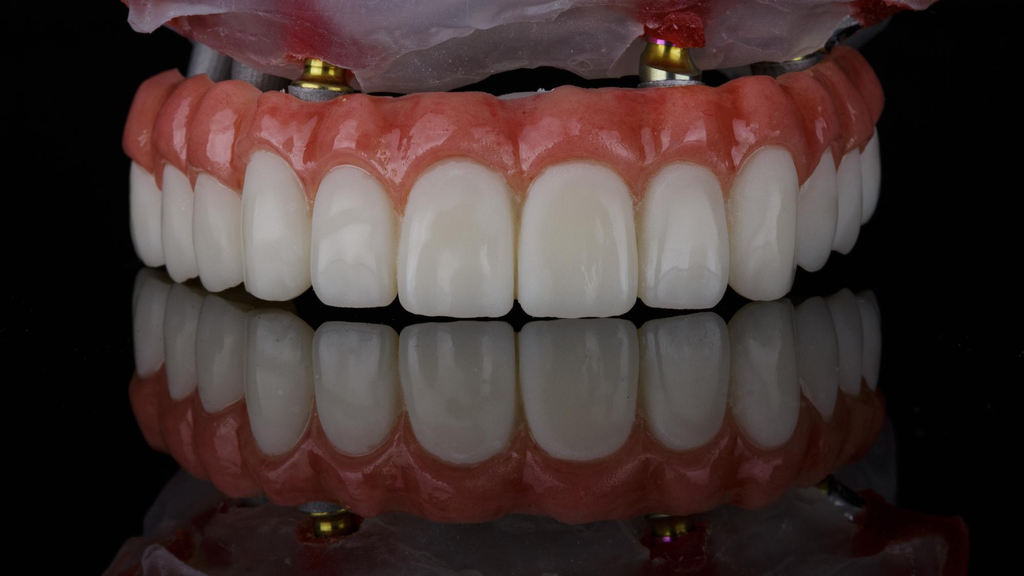
Overdentures are most often discussed in the context of the lower jaw, where a conventional denture tends to be least stable due to the shape of the jawbone and the tongue’s constant movement. They’re also used on the upper jaw, though the approach differs slightly. Upper jaw bone is generally softer, so a few more implants are often needed to provide the same level of support, and a bar attachment is sometimes preferred over ball attachments for that reason.
One notable benefit on the upper jaw is that an implant-retained denture can sometimes be designed with a smaller palate section, or none at all, since it no longer needs to rely on suction against the roof of the mouth. For patients who find a full palate covering affects taste or comfort, this can be a meaningful difference, though whether a reduced-palate design suits a particular case depends on the number and position of the implants placed.
How do overdentures compare to other options?
| Column1 | Traditional denture | Implant-supported overdenture | Fixed full-arch implants |
| Stability | Relies on suction or adhesive, can move when eating | Clips onto implants, far more secure | Fixed permanently in place |
| Implants involved | None | Typically 2 to 4 | More, often 4 to 6 or more depending on bone quality |
| Removable | Yes, taken out daily | Yes, clicks off for cleaning | No, cleaned in place like natural teeth |
| Relative cost | Generally the lowest | Sits in the middle | Generally the highest |
| Often suits | Minimal bone, lower budget | Denture wearers wanting more stability without going fully fixed | Those wanting a permanent result with sufficient bone and implants |
Fixed full-arch implants are sometimes referred to as All-on-X, since the number of implants used varies by jaw and bone quality rather than being fixed at a set number.
What does the process and timeline look like?
The process starts with a consultation and imaging to check bone levels and plan implant positions. If there’s enough bone, implants are placed and given time to fuse, generally three to six months, with a temporary denture often worn during that healing period. Once healed, the attachment system is fitted and matched to a new or adjusted denture. Altogether, this usually takes somewhere between four and seven months from the first consultation to the finished result, longer if bone grafting is needed first.
Patients who already have a well-fitting denture sometimes have it retrofitted with attachment components rather than starting from scratch, provided it’s in good enough condition and the fit still suits once the implants are in place. Others, particularly if the existing denture is old or poorly fitting, are better served by a new denture built specifically to work with the implants from the outset. Which approach makes more sense is something worked out at the consultation once the implant positions are known.
How are overdentures cared for and maintained?
The denture is removed nightly and cleaned in the same way as a traditional denture, while the area around the attachments is brushed to keep it free of plaque. The small clips or rubber inserts inside the attachments wear down faster than the implants themselves and are typically replaced every one to two years as routine maintenance, rather than something to be concerned about. Regular check-ups let the dentist monitor the implants and adjust the denture’s fit as needed.
Do overdentures need to be replaced over time? The denture itself can last many years with care, though the attachment components inside it wear faster and are usually replaced periodically, similar to replacing a worn part rather than starting the treatment again from scratch.
What does this typically cost?
Cost depends on several factors: how many implants are needed, whether bone grafting is required first, which attachment type is used, and whether the denture is for the upper or lower jaw. Ball attachments tend to work out less expensive than bar attachments, partly because they’re a simpler system. A precise figure can’t be given without an exam, and costs are confirmed at a consultation rather than quoted in general terms.
Is an overdenture cheaper than a fixed full-arch implant bridge? Generally, yes, largely because fewer implants are usually needed and the prosthesis itself is less complex than a fixed bridge. Exact costs still depend on the individual case and are confirmed at a consultation.
In summary
An overdenture is a removable denture that clips onto two or more dental implants, giving it far more stability than a conventional denture without the permanence of a fixed full-arch bridge. It suits patients who already wear a denture, most often on the lower jaw, and want a more secure fit without committing to a fully fixed result. The right option, including which attachment system and how many implants, depends on an individual assessment of bone, gum health and the current denture’s fit.
Disclaimer: This article is for informational purposes only and does not constitute professional medical or dental advice, diagnosis, or treatment. Every patient’s situation is unique, and treatment recommendations may vary based on individual circumstances. Always consult with a qualified dental professional before making decisions about your oral health care. If you have a dental emergency, contact your dentist or seek immediate medical attention.
FAQs about Overdentures
1. What’s the difference between an overdenture and a regular denture?
A regular denture rests on the gums and relies on suction or adhesive to stay in place, while an overdenture clips onto dental implants for a far more secure fit. Both are removable and cleaned in the same way, but the overdenture is much less likely to shift while eating or speaking.
2. How many implants are needed to support an overdenture?
Most lower-jaw overdentures use two to four implants, while upper-jaw cases sometimes need a few more due to differences in bone density. The exact number depends on bone quality and is confirmed with imaging at the consultation.
3. Can overdentures be removed for cleaning?
Yes. Despite clipping firmly onto the implants during the day, the denture is designed to be taken out each night for cleaning, just like a traditional denture.
4. How long do the implants and attachments in an overdenture typically last?
The implants themselves can last many years, often decades, with good oral hygiene. The clips or rubber inserts inside the attachment system wear faster and are generally replaced every one to two years as routine maintenance.
5. Is an overdenture the same as a fixed full-arch implant bridge?
No. An overdenture is removable and clips onto implants, while a fixed full-arch bridge, sometimes called All-on-X, is permanently fixed in place and only removed and cleaned by a dentist. Overdentures also typically use fewer implants than a fixed bridge.
6. Am I too old to get implant-supported dentures?
Age on its own isn’t a barrier. Suitability depends more on bone density, gum health and general oral health, all of which are assessed individually rather than assumed from age alone.
Thinking whether an overdenture might suit you? Visit our implant-supported dentures page to book a consultation, or call (07) 5681 1877 to talk it through first.