A layer of plaque on your teeth by the end of the day is normal, and a good brush gets rid of most of it. Tartar is what’s left behind when plaque isn’t cleared away in time: a hardened deposit cemented onto the tooth that brushing alone can’t touch. Knowing the difference matters, because one you can manage at home and the other genuinely needs a dentist.
Quick overview
- What it is: plaque is a soft, sticky film of bacteria; tartar is plaque that has hardened onto the tooth
- Why it matters: tartar can’t be brushed away, and it’s the main driver of gum disease if it’s left in place
- What helps: daily brushing and flossing keeps plaque from building up; tartar needs professional removal by a dentist.
- What to do: book a check-up and clean if it’s been more than six to twelve months, or if you can feel a hard, rough patch near the gumline
What is plaque?
Plaque is a soft, sticky film that forms on teeth more or less continuously. It’s made up of bacteria that live naturally in the mouth, feeding on sugars and starches left behind from food and drink, and producing acid as a by-product. Left in place, that acid is what starts to wear away enamel and cause decay. Plaque is easy to miss because it’s usually pale yellow or colourless, but you can often feel it as a slightly fuzzy texture when you run your tongue over your teeth. The good news is it comes off with regular brushing and flossing, which is why it’s rarely a problem on its own if home care is reasonably consistent.
What is tartar?
Tartar, also called dental calculus, is what plaque turns into if it’s left on the tooth for long enough to harden. Cleveland Clinic describes it as mineralised plaque, made up of dead bacteria combined with minerals from saliva such as calcium phosphate. Unlike plaque, tartar feels hard rather than fuzzy, often shows up as a yellow, brown or even black deposit near the gumline, and can’t be brushed or flossed away once it’s formed. It tends to build up fastest along the inside of the lower front teeth and the outside of the upper back teeth, simply because saliva collects there.
Difference between Plaque and Tartar
| Plaque | Tartar | |
|---|---|---|
| Texture | Soft, sticky, slightly fuzzy | Hard, rough, fixed to the tooth |
| Colour | Pale yellow or colourless | Yellow, brown or black |
| How it forms | Builds up daily from bacteria feeding on food debris | Forms when plaque isn’t removed and hardens with minerals from saliva |
| Removable at home | Yes, with regular brushing and flossing | No, needs professional removal |
| Main risk if left | Tooth decay | Gum disease, decay, bad breath |
Why does tartar matter for your gums?
Tartar’s rough surface is an easy place for more plaque to cling to, which is part of why it makes gum problems worse rather than just sitting there harmlessly. Healthdirect explains that gum disease starts with plaque building up along the gumline, and once it hardens into tartar, brushing can’t reach it, so the bacteria keep irritating the gum tissue underneath. Early on, that shows up as gingivitis, which is reversible with proper cleaning. Left long enough, it can progress to periodontitis, where the bone supporting the teeth is affected, something Healthdirect describes as manageable but not curable once it reaches that stage. Regular tartar removal is one of the more straightforward ways to stop that progression before it starts. Our guide to gum disease, from gingivitis to periodontitis covers the stages in more depth.
How is tartar removed?
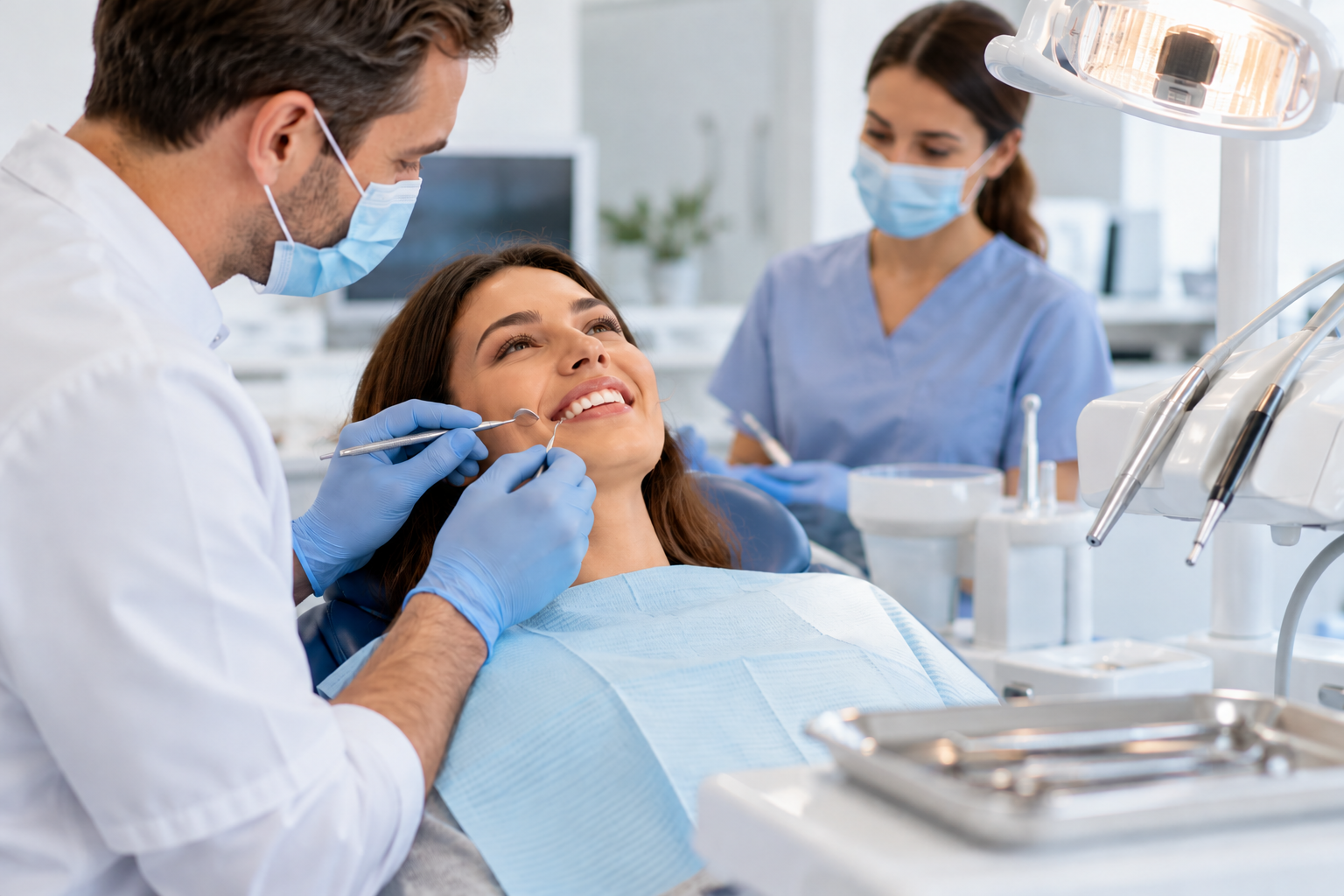
Tartar removal is a routine part of a professional clean, usually called scaling. A dentist uses specialised hand instruments, or an ultrasonic scaler that uses gentle vibration, to lift tartar away from the tooth surface without damaging the enamel underneath. Where tartar has built up below the gumline, a deeper clean called scaling and root planing may be recommended, which also smooths the tooth root to help gum tissue reattach. This is typically followed by a polish to smooth the tooth surface and remove surface staining, and often a fluoride treatment afterwards. None of it is something a toothbrush, no matter how thorough, can do on its own. This is exactly what’s covered during a check-up and clean at Bundall Dental and Implants. If you’re weighing up scaling and polishing against teeth whitening, our comparison of the two goes through how they differ and when each one is the right call.
Can you remove tartar at home?
Not reliably, and it’s worth being cautious about DIY tartar removal tools sold for home use. Because tartar is fixed to the tooth, scraping it off without training risks scratching the enamel or damaging the gum tissue, and it’s easy to miss tartar sitting below the gumline where it does the most harm. The more realistic goal at home is stopping plaque from turning into tartar in the first place, through twice-daily brushing, daily flossing, and keeping sugary food and drink to mealtimes rather than grazing throughout the day. Once tartar has actually formed, professional removal is the only way to get rid of it.
How often should you have a scale and clean?
Healthdirect recommends a dental check-up every six to twelve months, and that’s generally when scaling happens too, alongside an exam that catches decay or gum problems early. Some people build up tartar faster than others, depending on saliva chemistry, diet, and how consistent brushing and flossing are, so a dentist may suggest a shorter interval if that applies to you. Sticking to a regular schedule is usually more effective, and less involved, than waiting until tartar has had time to build up and irritate the gums. Read more about the check up and clean services at Bundall Dental.
Summary: Plaque is a normal, everyday film that regular brushing and flossing keeps in check. Tartar is what happens when plaque isn’t cleared in time, and once it’s hardened onto the tooth, only a dentist can remove it safely. Staying on top of home care and keeping up with regular scale and cleans is what keeps one from turning into the other.
Book a consultation, and we’ll assess your teeth before making any recommendations.
Call (07) 5681 1877 or reach out to us on our contact page.
Disclaimer: This article is for informational purposes only and does not constitute professional medical or dental advice, diagnosis, or treatment. Every patient’s situation is unique, and treatment recommendations may vary based on individual circumstances. Always consult with a qualified dental professional before making decisions about your oral health care. If you have a dental emergency, contact your dentist or seek immediate medical attention.
FAQs about Tartar
1. Can plaque turn into tartar overnight?
Not overnight, but it doesn’t take long. Plaque that isn’t brushed away starts hardening with minerals from saliva within a few days, faster in some people than others depending on diet and saliva chemistry. Once it’s hardened into tartar, brushing won’t remove it, which is why daily cleaning matters more than catching up later.
2. Does tartar always cause gum disease?
Not always, but it’s a major risk factor. Tartar’s rough surface makes it easier for more plaque to build up, and the bacteria in that plaque are what irritate gum tissue and lead to gingivitis. Removing tartar regularly through professional cleaning is one of the more effective ways to keep gum disease from developing.
3. Is it safe to scrape tartar off at home?
It’s not recommended. Tartar is fixed to the tooth, and scraping it off without training can scratch enamel or damage the gum tissue around it, particularly below the gumline where tartar does the most harm. Professional scaling uses instruments designed to remove tartar without damaging the tooth, which is why it’s the safer option.
4. Why does tartar look yellow or brown?
Tartar picks up staining from food, drink and tobacco as it builds up, along with minerals from saliva that give it its hardened texture. The longer it’s left in place, the darker it tends to get, which is one reason a visible yellow or brown deposit near the gumline is worth getting checked rather than left alone.
5. Does everyone get tartar buildup at the same rate?
No. Saliva chemistry, diet, how consistently someone brushes and flosses, and even some medications all affect how quickly plaque hardens into tartar. Some people need scaling more often than the standard six to twelve month check-up interval, which is something a dentist can advise on based on how much tartar tends to build up for you.