
Gum disease is one of the most common oral health conditions affecting Australians, yet many Gold Coast residents don’t realise they have it until it has progressed significantly. From the earliest signs of gingivitis to advanced periodontitis, understanding the stages, symptoms, and gum disease treatment Gold Coast options can help you protect your smile and overall health.
At Bundall Dental and Implants, we serve patients from across the Gold Coast, including Bundall, Surfers Paradise, Broadbeach, and Southport, who are concerned about bleeding gums, gum recession, and other warning signs. This guide will help you understand what gum disease is, how it develops, and what you can do about it.
What Is Gum Disease?
Gum disease, also known as periodontal disease, is an inflammatory condition affecting the tissues surrounding and supporting your teeth. It begins with bacterial plaque accumulation along the gumline and, if left untreated, can progress to destroy the bone that supports your teeth, potentially leading to tooth loss.
According to the Australian Dental Association, gum disease is the leading cause of tooth loss in adults over 35. Research shows that approximately 50% of Australian adults have some form of gum disease (Source: Australian Institute of Health and Welfare).
The good news? It’s largely preventable with proper oral hygiene and regular dental check-ups.
The Two Main Stages of Gum Disease
Stage 1, Gingivitis: The Early Stage
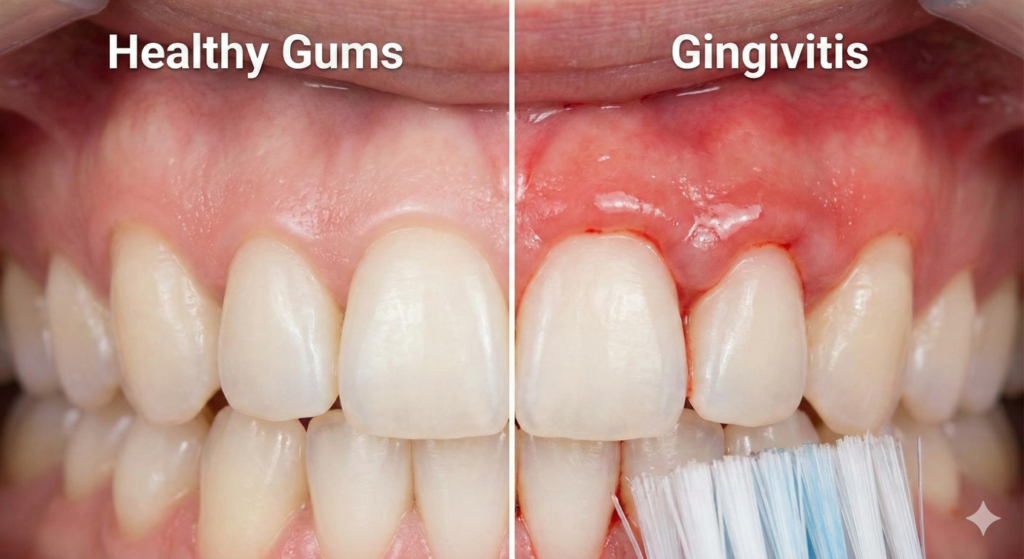
Gingivitis is the earliest and mildest form of gum disease. At this stage, inflammation affects only the gums and has not yet damaged the underlying bone.
Symptoms of Gingivitis:
- Red, swollen, or puffy gums
- Bleeding gums when brushing or flossing
- Tender gums
- Bad breath (halitosis)
- Gums that appear darker red instead of healthy pink
The good news: Gingivitis can usually be reversed with better daily oral hygiene and a professional scale and clean to remove plaque and tartar. With busy lifestyles, balancing work in Southport’s business district, enjoying Surfers Paradise beaches, or raising families in Broadbeach, it’s easy to skip dental appointments. However, six-monthly check-ups at Bundall Dental and Implants can catch gingivitis before it progresses.
Stage 2, Periodontitis: The Advanced Stage
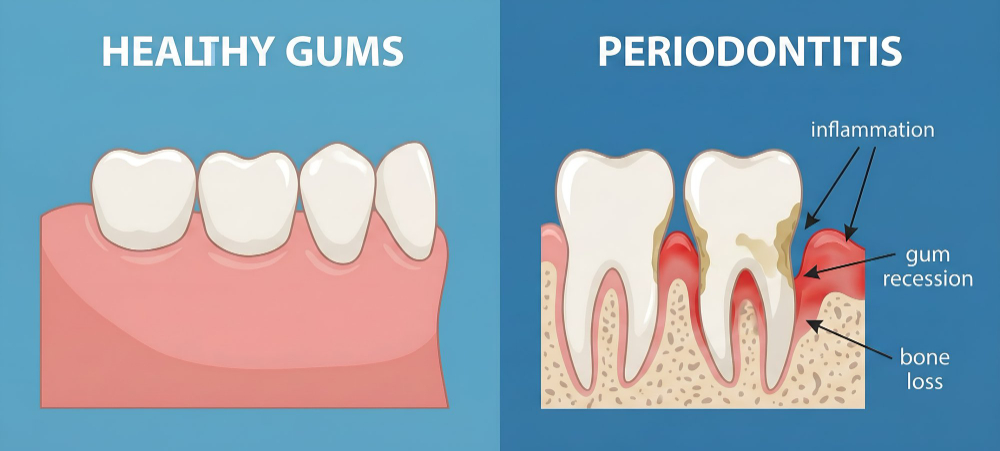
If gingivitis is left untreated, it can progress to periodontitis, a more serious form where damage becomes irreversible, though progression can be halted with treatment.
Stages of Periodontitis:
| Stage | Pocket Depth | Bone Loss | Symptoms |
|---|---|---|---|
| Mild | 4-5mm | Minimal | Increased bleeding, slight recession |
| Moderate | 6-7mm | Moderate | Teeth may feel loose, persistent bad breath |
| Severe | 8mm+ | Significant (50%+) | Loose/shifting teeth, pus, painful chewing |
Symptoms of Periodontitis:
- Persistent bad breath or bad taste
- Gums that pull away from teeth (recession)
- Deep pockets between teeth and gums
- Loose or shifting teeth
- Changes in bite alignment
- Pus between teeth and gums
- Pain when chewing
Important: If you notice any of these symptoms, contact Bundall Dental and Implants immediately. Early intervention can prevent tooth loss.
Risk Factors for Gum Disease
Lifestyle Factors
- Smoking: One of the strongest risk factors for gum disease. It weakens the body’s response to infection and slows healing. Read more: The Impact of Oral Health and Smoking
- Poor Oral Hygiene: Inadequate brushing and flossing allow plaque buildup.
- Diet: High sugar intake and lack of essential nutrients (particularly vitamin C) compromise gum health.
- Stress: Makes it harder for your body to fight infections.
Medical Conditions
- Diabetes creates a dangerous cycle where each condition worsens the other.
- Hormonal Changes: Pregnancy, menstruation, and menopause increase gum sensitivity.
- Medications: Some reduce saliva flow, which protects teeth and gums.
- Genetics: Some people are genetically more susceptible despite good hygiene.
- Compromised Immunity: HIV/AIDS, cancer treatment, or autoimmune diseases increase vulnerability.
- Age: Gum disease becomes more common with age. AIHW data shows that 59% of adults aged 65 and over had periodontitis in 2017-18, so senior dental care on the Gold Coast should include regular periodontal assessments.
The Link Between Gum Disease and Overall Health
Gum disease isn’t just about your mouth. Research has found associations between gum disease and several general health conditions, including:
- Heart Disease and Stroke: Research shows associations with cardiovascular disease
- Diabetes: Bidirectional relationship each worsens the other
- Respiratory Disease: Bacteria from the mouth may be inhaled into the lungs
- Pregnancy Complications: May increase risk of premature birth
- Alzheimer’s Disease: Emerging research suggests potential links
The takeaway: Looking after your gums is an important part of looking after your general health.
Diagnosing Gum Disease on the Gold Coast
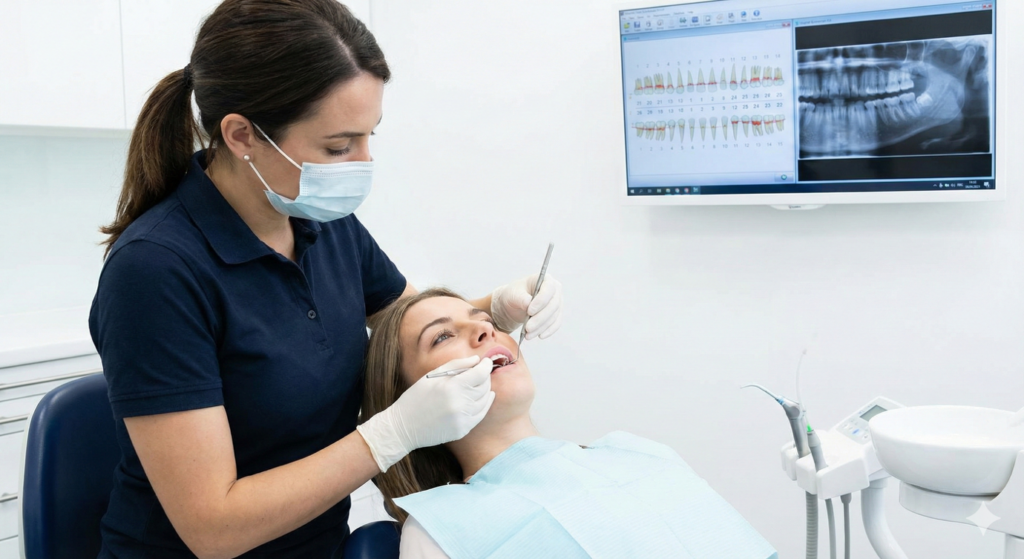
At Bundall Dental and Implants, Dr. Mehran Shaibani conducts comprehensive assessments including:
- Periodontal probing: Measuring pocket depths (healthy gums: 1-3mm)
- Digital X-rays: Revealing bone loss not visible in clinical exams
- Periodontal charting: Tracking disease progression over time
- Tooth mobility and bite assessment
Treatment Options for Gum Disease
If you’re looking into gum disease treatment Gold Coast options, the right approach depends on how advanced the condition is, ranging from professional cleaning for gingivitis to more involved procedures for periodontitis.
Treatment for Gingivitis
Gingivitis treatment in Gold Coast typically focuses on removing plaque and tartar, improving daily oral hygiene, and preventing the condition from progressing to periodontitis.
- Professional Cleaning: Removes plaque and tartar above and below the gumline.
- Improved Home Care: Proper brushing and flossing techniques.
- Regular Maintenance: Six-monthly check-ups prevent recurrence.
Treatment for Periodontitis
Periodontitis treatment in Gold Coast depends on the severity of the disease and the extent of gum and bone damage. Treatment may range from deep cleaning and antibiotics to surgical procedures for advanced cases.
Periodontal treatments Bundall patients can access at our clinic include the following options, depending on how advanced the condition is:
- Deep cleaning (scaling and root planing): Removes plaque and tartar from deeper gum pockets, usually under local anaesthetic.
- Antibiotics: Topical or oral antibiotics may be used alongside cleaning where appropriate.
- Laser Therapy: Modern treatment removes diseased tissue with less discomfort and faster healing.
- Surgical Treatments (for advanced cases):
- Flap surgery for deep root cleaning
- Bone grafts to regenerate destroyed bone
- Soft tissue grafts to cover exposed roots
- Ongoing Maintenance: More frequent cleanings, often every three to four months, to help keep the condition stable.
Preventing Gum Disease on the Gold Coast
Daily Oral Hygiene
- Brush twice daily for two minutes
- Floss daily to remove plaque between teeth
- Use antibacterial mouthwash if recommended
- Replace toothbrush every 3-4 months
- Clean your tongue
Regular Dental Visits
Six-monthly check-ups and professional cleanings at Bundall Dental and Implants are essential for:
- Removing tartar
- Early detection
- Professional monitoring
- Personalised advice
Book your preventive check-up today
Lifestyle Modifications

- Quit smoking
- Eat a balanced diet rich in vitamins C and D
- Manage stress
- Control diabetes
- Stay hydrated
Frequently Asked Questions
Is gum disease reversible?
Gingivitis can usually be reversed with good oral hygiene and professional cleaning. Damage from periodontitis cannot be undone, but treatment can help slow or stop it from progressing.
Related: Importance of Gum Health
Can I lose my teeth from gum disease?
Yes. Advanced periodontitis is a common cause of tooth loss in adults, which is why early detection and treatment matter. If teeth are lost, dental implants may be one option to replace them, depending on your bone health and general health.
Does gum disease treatment hurt?
Deep cleaning is usually carried out under local anaesthetic to keep you comfortable. Some tenderness afterwards is common and can usually be managed with over-the-counter pain relief.
How long does treatment take?
Gingivitis often improves within a few weeks of better home care and a professional clean. Mild to moderate periodontitis usually needs one or two deep cleaning sessions, followed by a review after four to six weeks of healing. More advanced cases need treatment over several months. Ongoing maintenance, often every three to four months, helps keep the condition stable.
Will my insurance cover treatment?
Many private health policies with extras cover preventive care and some periodontal treatment, but rebates depend on your insurer and level of cover. We can claim on the spot through HICAPS and give you a quote before treatment begins.
Book Your Gum Health Assessment Today
Don’t wait for pain or loose teeth. Many patients with significant gum disease experience no discomfort until advanced stages.
Contact Bundall Dental and Implants today for a comprehensive periodontal assessment.
Conveniently located in Bundall, serving Surfers Paradise, Broadbeach, Southport, and all Gold Coast suburbs.
Disclaimer: This article is for informational purposes only and does not constitute professional medical or dental advice, diagnosis, or treatment. Every patient’s situation is unique, and treatment recommendations may vary based on individual circumstances. Always consult with a qualified dental professional before making decisions about your oral health care. If you have a dental emergency, contact your dentist or seek immediate medical attention.