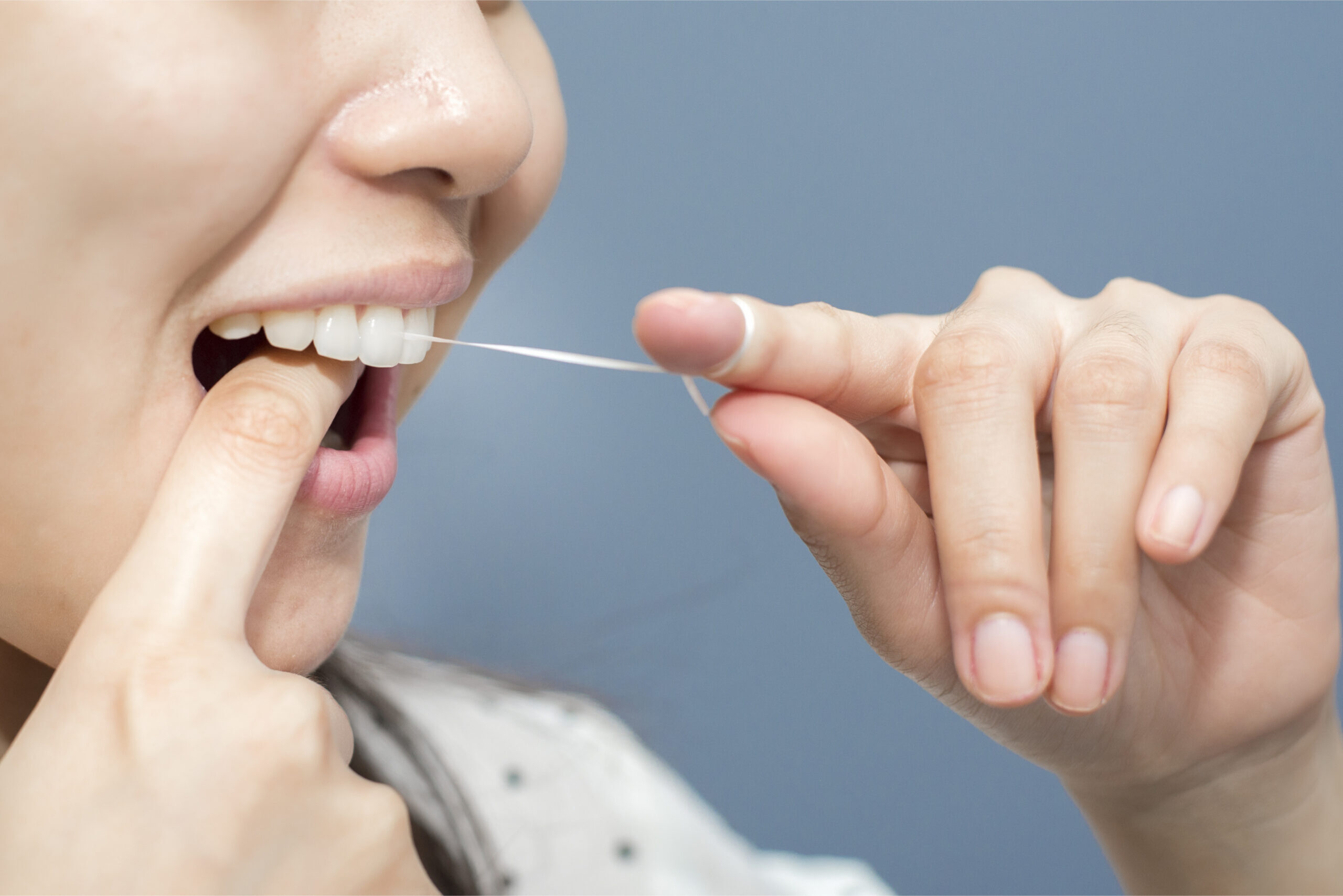
Choosing between floss picks and traditional dental floss is a common dilemma, and you’ll find both on the same supermarket shelf. Both clean between your teeth, but they work slightly differently, and the right choice depends on your teeth, your hands and the habit you’re most likely to keep. This guide compares the two, explains how to use each one properly, and covers other options your dentist may suggest.
The short answer: String floss can be wrapped around each tooth, so it tends to clean more thoroughly when it’s used well. Floss picks are easier to hold and handle, so many people find it easier to use them every day. The Australian Dental Association recommends cleaning between your teeth once a day, and whichever tool you’ll actually use daily is the one that will do your gums the most good. If you have wider gaps, a bridge, implants or braces, ask your dentist whether interdental brushes would suit you better.
The Critical Role of Flossing in Oral Health
Flossing is an essential part of a good oral hygiene routine. Brushing cleans the outer surfaces of your teeth, but flossing reaches the areas between teeth and along the gumline, where a toothbrush can’t reach effectively. The Australian Dental Association recommends cleaning between your teeth every day, using floss, flossettes (another name for floss picks), interdental brushes or a water flosser.
The Impact of Plaque and Tartar
Dental plaque, a biofilm made up of bacteria and their byproducts, forms continuously on teeth. If it isn’t removed regularly, plaque can harden into tartar, which can only be removed with a professional scale and clean. Plaque and tartar building up along the gumline are a primary factor in developing gingivitis and, if left unchecked, more serious gum disease.
Traditional Floss: The Established Method

Traditional dental floss, usually made from nylon or PTFE (polytetrafluoroethylene), has long been the standard recommendation for cleaning between teeth. You wind a length of floss around your fingers and guide it between each pair of teeth, curving it around the side of each tooth.
Advantages of Traditional Floss
- Thorough cleaning: Traditional floss can be curved around the shape of each tooth and slipped just under the gumline, which helps remove plaque effectively.
- Adaptable technique: You can adjust the pressure and angle to suit the alignment and spacing of your teeth.
- Cost-effective: A roll of floss generally costs less per use than other flossing tools.
Drawbacks of Traditional Floss
- Technique sensitivity: Using traditional floss properly takes some dexterity and practice, which some people find challenging.
- Time commitment: Traditional flossing can take longer, which may put some people off doing it every day.
Floss Picks: A Modern Alternative
Floss picks, also called flossers or flossettes, have a small plastic handle with a short strand of floss stretched between two prongs. They offer a different approach to cleaning between teeth.
Advantages of Floss Picks
- Ease of use: The handle can make floss picks easier to manage if you have limited dexterity, or for reaching back teeth. They are also a practical option for parents flossing their children’s teeth.
- Convenience: They’re easy to carry, so you can clean between your teeth on the go.
- Consistency: Because they’re simpler to use, floss picks may help you floss more regularly if you find traditional floss cumbersome.
Drawbacks of Floss Picks
- Limited manoeuvrability: Because the floss is held tight between two prongs, it’s harder to curve it around each tooth, which can make cleaning less thorough.
- Single use and environmental impact: Most floss picks are designed to be used once. You can rinse the pick between teeth during one session, but the floss frays and collects bacteria, so throw it away afterwards. As single-use plastic items, they also create more waste than a roll of floss.
- Long-term cost: Each pick is inexpensive, but the cumulative cost of disposable floss picks can exceed that of traditional floss over time.
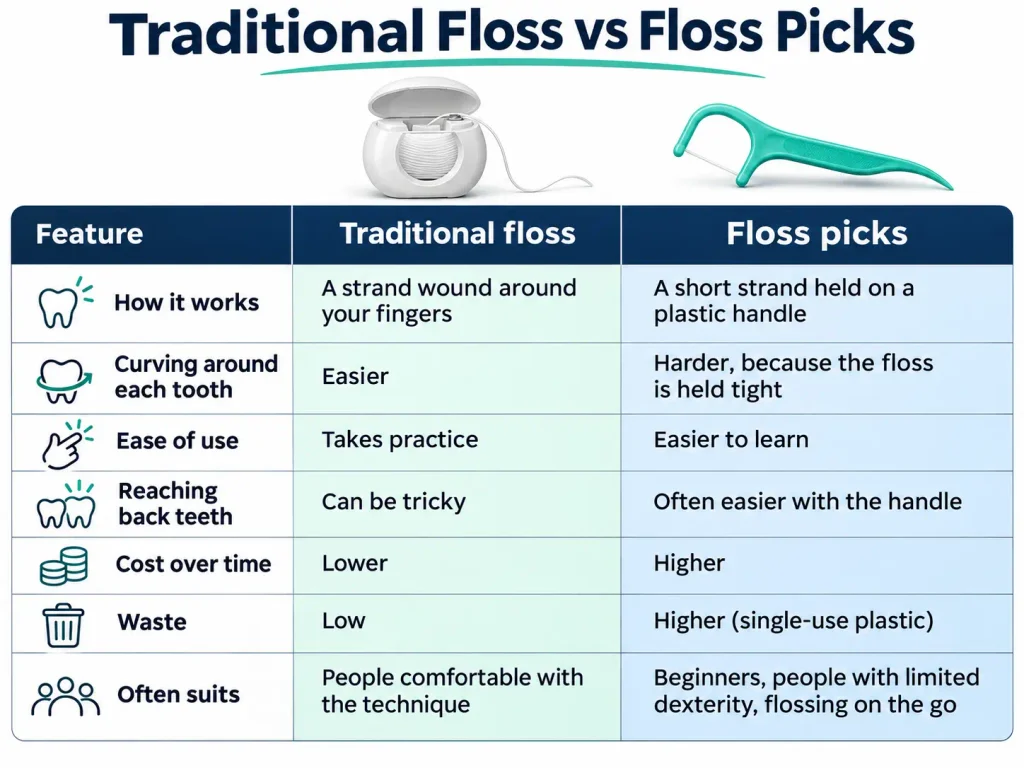
Dental Floss vs Floss Picks at a Glance
| Traditional floss | Floss picks | |
|---|---|---|
| How it works | A strand wound around your fingers | A short strand held on a plastic handle |
| Curving around each tooth | Easier | Harder, because the floss is held tight |
| Ease of use | Takes practice | Easier to learn |
| Reaching back teeth | Can be tricky | Often easier with the handle |
| Cost over time | Lower | Higher |
| Waste | Low | Higher (single-use plastic) |
| Often suits | People comfortable with the technique | Beginners, people with limited dexterity, flossing on the go |
How to Use a Floss Pick Properly
A floss pick works best when you use the same action as string floss, rather than just pushing it in and out.
- Guide the floss gently between two teeth with a slight back-and-forth motion. Don’t snap it down onto the gum.
- Press the floss against the side of one tooth and move it up and down, going slightly below the gumline.
- Repeat on the side of the neighbouring tooth, then move on to the next gap.
- Rinse or wipe the pick if it collects debris, and throw it away when you’ve finished.
Cleaning between your teeth before you brush helps fluoride toothpaste reach those surfaces. Some bleeding is common when you first start flossing. The ADA advises not to stop because of it, but if it continues for more than a week or two, have your gums checked. You’ll find more tips in our guide to brushing and flossing habits that actually work.
Looking for an Alternative to Dental Floss?
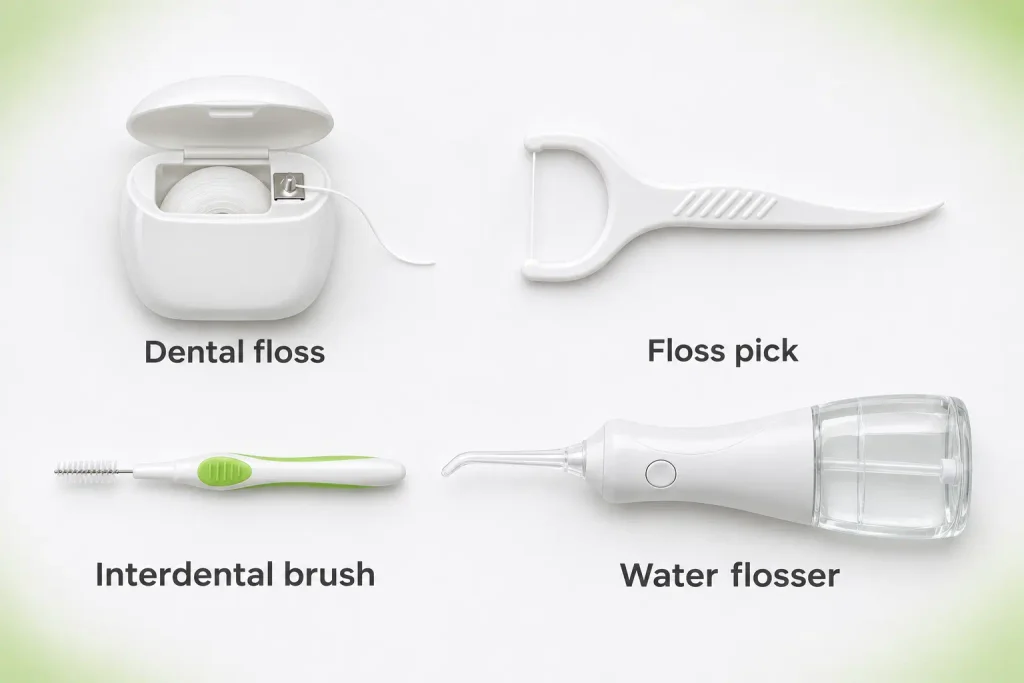
If dental floss doesn’t suit you, there are several other ways to clean between your teeth. Floss picks are the simplest swap. Interdental brushes are tiny brushes that fit between teeth, and soft picks are rubber-bristled versions of the same idea. Water flossers use a thin stream of water to rinse between teeth and along the gumline. A 2019 Cochrane review of 35 trials found that cleaning between teeth with floss or interdental brushes, as well as brushing, may reduce gingivitis more than brushing alone. Interdental brushes and water flossers appeared to perform better than floss, although the authors rated the evidence as low certainty. Interdental brushes are often recommended where there are wider gaps between teeth, around a dental bridge or dental implants, or for people wearing braces. They come in different sizes, so ask your dentist which size suits you.
Which Should You Choose: Traditional Floss or Floss Picks?
Traditional floss has long been considered the standard for cleaning between teeth, because it can adapt to the shape of each tooth. But the most effective tool is the one you’ll use every day. If you struggle with traditional floss, or you’re more likely to keep up the habit with floss picks, they’re a reasonable alternative, as long as you use them with the right technique.
Questions to Ask Yourself
- How easy do you find handling floss? If winding and guiding floss is fiddly, a floss pick may be easier.
- How often do you actually floss now? If you often skip it, the more convenient option may help you build the habit.
- Where will you be flossing? Floss picks are easy to keep in a bag or car.
- What are your teeth like? Tight contacts, wider gaps, crowding, bridges, implants or braces can all favour one tool over another.
Both traditional floss and floss picks have their place in a daily oral care routine. Traditional floss offers more thorough cleaning when it’s used well, while floss picks are a convenient alternative that may help you clean between your teeth more consistently.
At your check-up and clean, Dr Mehran Shaibani can show you the right technique, check how well your current routine is working, and help you choose the option that suits your teeth. Contact Bundall Dental and Implants to book an appointment.
Frequently Asked Questions
Are floss picks as good as regular floss?
String floss can be curved around each tooth, so it usually cleans more thoroughly when it is used well. Floss picks can still clean effectively with the right technique, and many people find them easier to use every day, which matters just as much.
Are floss picks single use?
Yes, most floss picks are designed to be used once. You can rinse the pick between teeth during one session, but throw it away afterwards, because the floss frays and collects bacteria.
Can I use floss picks instead of floss?
Yes. If you find string floss difficult to use, floss picks are a reasonable alternative. Slide the floss gently between your teeth and curve it against the side of each tooth, rather than just pushing it in and out.
Do dentists recommend floss picks?
The Australian Dental Association lists floss picks, also called flossettes, as one of the ways to clean between your teeth, along with string floss, interdental brushes and water flossers. Your dentist can suggest which option suits your teeth.
When should I use a floss pick?
Use it once a day, ideally before you brush, so fluoride toothpaste can reach the surfaces between your teeth.
Disclaimer: This article is for informational purposes only and does not constitute professional medical or dental advice, diagnosis, or treatment. Every patient’s situation is unique and treatment recommendations may vary based on individual circumstances. Always consult with a qualified dental professional before making decisions about your oral health care. If you have a dental emergency, contact your dentist or seek immediate medical attention.