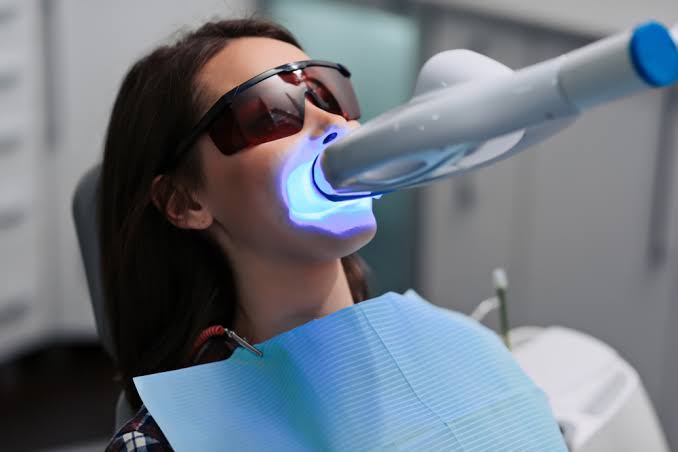
In-chair teeth whitening, including Philips Zoom Whitening and at-home whitening both lighten stained or discoloured teeth, but at different speeds and strengths. In-chair whitening uses a stronger, professionally applied gel for a faster result in a single visit. At-home whitening uses a milder gel worn in trays over one to two weeks. The right choice for patients on the Gold Coast depends on how quickly you want results, the cause of staining, and tooth sensitivity.
What is in-chair teeth whitening?
In-chair whitening, often known by the brand name Zoom (a Philips product), is carried out at the dental practice under professional supervision.
A higher-concentration gel is applied to the teeth, sometimes activated with a light, and the result is visible in a single appointment. Because it is supervised, the gums and lips are protected during treatment. It is commonly chosen when someone wants a noticeable change quickly, for example before a wedding or a special occasion.
What is at-home teeth whitening?
At-home whitening uses a lower-strength gel worn in trays over a period of days or weeks. Custom trays made by a dentist are fitted closely to the teeth and hold the gel evenly, which may give more predictable results than the generic pharmacy kits. The gradual approach can suit people who prefer to whiten at their own pace, though it requires consistency to reach the desired shade.
Q: Which whitening method gives faster results?
In-chair whitening is the faster option, with a visible change usually achieved in one supervised appointment. At-home whitening works gradually over one to two weeks. Faster is not always better; the right method depends on your teeth, the cause of staining, and your preferences.
Which Is Better: In-Chair or At-Home Teeth Whitening?
Neither method is universally better. In-chair whitening offers speed and professional supervision, which can help manage sensitivity and protect the gums. At-home whitening offers flexibility and a gentler pace. Many people combine the two, starting with an in-chair session and maintaining the result with at-home trays. A dentist can assess the cause of discolouration and your enamel before suggesting a suitable approach for patients seeking teeth whitening in Gold Coast.
| Factor | In-Chair Whitening | At-Home Whitening |
| Speed | Single visit | One to two weeks |
| Gel strength | Higher, professionally applied | Lower, self-applied |
| Supervision | Done at the practice | Done by you |
| Sensitivity control | Managed during treatment | Managed by pacing use |
| Maintenance | Top-ups over time | Ongoing tray use |
How long does teeth whitening last?
Whitening results are not permanent. Results may last from several months to a few years, depending on the individual, oral hygiene, diet, and lifestyle habits. Periodic top-ups may help maintain the result. Coffee, tea, red wine, and smoking all speed up re-staining. Good oral hygiene and occasional maintenance help preserve the result. Because outcomes vary from person to person, a dentist can give you a more realistic idea based on your teeth.
Q: Is teeth whitening safe for your enamel?
Professionally supervised whitening is generally considered safe for enamel when used correctly. Temporary sensitivity is the most common side effect and usually settles within a few days. Risks increase with overuse or unsupervised high-strength products, which is why a dental assessment before whitening is recommended.
Is teeth whitening suitable for everyone?
Whitening is not suitable in every situation. It does not change the colour of existing crowns, veneers or fillings, so these may need review if you want an even result. Whitening is generally postponed during pregnancy and breastfeeding as a precaution. Patients with untreated decay, gum disease, cracks or significant sensitivity should also be assessed before treatment. Australian guidance from healthdirect on teeth whitening notes that only registered dental professionals can assess whether whitening is safe and appropriate for you, so a check-up first is a sensible starting point.
In Summary
In-chair whitening is faster and professionally supervised, while at-home whitening is gentler and more gradual. Neither is permanent, both have limits, and the right choice depends on your teeth and goals. A dental assessment is the best starting point.
Both may improve many common forms of tooth discolouration, including staining associated with food, drinks, ageing and lifestyle habits. Results depend on the type and cause of the discolouration.
Considering teeth whitening on the Gold Coast?
At Bundall Dental and Implants, Dr Mehran Shaibani and the team can assess the cause of discolouration and talk through whether in-chair or at-home whitening suits your teeth. The practice welcomes patients from Bundall, Benowa, Surfers Paradise, Main Beach, Broadbeach, Southport, Mermaid Beach and across the Gold Coast. Contact the practice for up-to-date information.
Frequently Asked Questions
1 Can whitening make my teeth too sensitive?
Temporary sensitivity is the most common side effect of both in-chair and at-home whitening, and it usually settles within a few days. Some people are more prone to it than others, particularly those with worn enamel or exposed roots. A dental assessment beforehand can help identify higher-risk cases and guide the gel strength used.
2. Does whitening work on crowns, veneers or fillings?
No. Whitening products lighten natural tooth enamel, but they do not change the colour of existing crowns, veneers or fillings. If you have visible restorations on front teeth, whitening can create a mismatch in shade. A dentist can advise whether replacing older restorations afterwards is worth considering to keep an even result.
3. How soon before a special event should I plan to whiten?
In-chair whitening gives a visible result in a single appointment, so it can suit last-minute planning, though booking a week or two ahead allows time to manage any sensitivity. At-home whitening needs one to two weeks of consistent use, so it works best when planned well in advance of the occasion.
4. How many shades whiter can I expect my teeth to become?
Results vary considerably between individuals and depend on your starting shade, the cause of staining, and which method you use. In-chair whitening tends to produce a more noticeable change in a single visit, while at-home whitening works more gradually. A dentist can give a more realistic estimate after assessing your teeth.
Disclaimer: This article is for informational purposes only and does not constitute professional medical or dental advice, diagnosis, or treatment. Every patient’s situation is unique, and treatment recommendations may vary based on individual circumstances. Always consult with a qualified dental professional before making decisions about your oral health care. If you have a dental emergency, contact your dentist or seek immediate medical attention.