Dentures and implant-supported overdentures both replace missing teeth, but they hold in place differently. A conventional denture rests on the gums and can be removed freely. An implant-supported overdenture attaches to dental implants through purpose-designed connectors, which may provide greater retention than a conventional denture. For older adults, the better option depends on jawbone health, comfort, budget and how much a loose denture affects daily life.
| Quick Overview What they are: A conventional denture is a removable set of teeth resting on the gums. An overdenture clips onto implants for extra support. Where they are used: Both replace several or all teeth in an arch when natural teeth are lost. Why chosen: Conventional dentures may suit people wanting a non-surgical option with a lower initial cost. Implant-supported overdentures may suit people prioritising extra stability when eating and speaking. One limitation: Dentures can move and need periodic relines. Implant-supported overdentures require implant placement surgery and sufficient bone and general health to support treatment. |
What is the difference between dentures and overdentures?
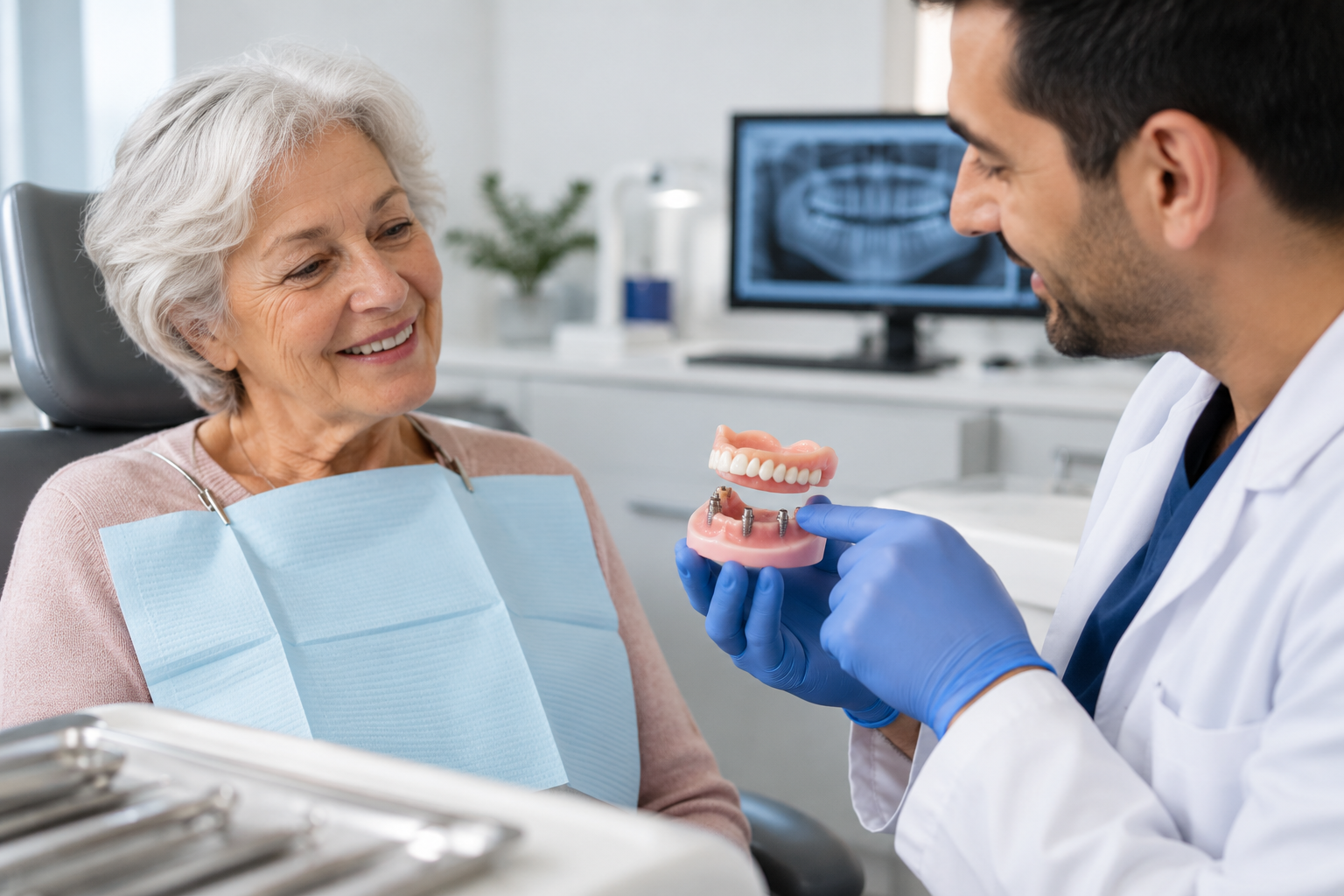
A conventional denture sits on the gums and is held mainly by suction and shape. An implant-supported overdenture is still removable, but it clips onto attachments fixed to a small number of implants placed in the jaw. The implants provide additional retention and can reduce movement during everyday use. Both restore the look of a full set of teeth; the main difference is how securely they stay in place during eating and talking.
Q: Do overdentures stay in permanently?
Implant-supported overdentures are designed to be removable for cleaning, so they are not fixed in the mouth permanently. They clip firmly onto the implants and stay put during everyday use, then unclip for daily hygiene. This combines the stability of implants with the easier cleaning of a removable denture.
How do implant-supported overdentures work?
A small number of implants, often two to four, are placed into the jawbone. After healing, attachments on the implants connect to matching fittings inside the denture. The denture then snaps securely into position. An overdenture may feel more stable than a conventional denture and may improve confidence when chewing or speaking. The trade-off is that implants require sufficient bone and a minor surgical step.
Which is better as you age: dentures or overdentures?
Neither is universally better; it depends on individual circumstances. Conventional dentures generally have a lower initial cost, although ongoing adjustments, relines or replacement may be required over time. Implant-supported overdentures may suit people seeking greater stability when eating and speaking. Bone health is a deciding factor, since implants need adequate bone. A dentist can weigh comfort, health and preference before recommending an approach.
| Factor | Conventional Denture | Implant-Supported Overdenture |
| Support | Rests on the gums | Clips onto implants |
| Stability | Can move when eating | More secure during use |
| Surgery | None | Implant placement surgery required |
| Bone needed | No implants required | Adequate bone required |
| Cleaning | Removable | Removable for cleaning |
| Upfront cost | Lower | Higher |
Q: Can you switch from dentures to overdentures later?
In many cases yes. People who start with a conventional denture and find it loose can often move to an implant-supported overdenture later, provided there is enough healthy bone for implants. A dentist assesses bone levels and general health before advising whether switching is a realistic option for you.
How do you care for each option?
Both need daily cleaning to stay comfortable and hygienic. Conventional dentures are removed and cleaned, and may need relines over time as the gums change shape. Overdentures are unclipped for cleaning, with attention to the area around the implants to keep the gums healthy. Regular dental visits help check the fit of either option and catch any issues with the implants or supporting tissues early.
In Summary
Conventional dentures rest on the gums and cost less, while implant-supported overdentures clip onto implants for more stability at a higher cost. Bone health, comfort and budget guide the choice, and switching from dentures to overdentures is often possible later. A dental assessment is the best starting point.
Weighing up tooth replacement on the Gold Coast?
At Bundall Dental and Implants, Dr Mehran Shaibani can assess your jawbone and talk through whether a conventional denture or an implant-supported overdenture suits you. The practice welcomes patients from Bundall, Benowa, Surfers Paradise, Main Beach, Southport, Broadbeach, Mermaid Beach and across the Gold Coast. Contact the practice for up-to-date information.
FAQs about Dentures vs Implant-Supported Overdentur
1. How long do dentures or overdentures typically last?
Conventional dentures often need relining or replacing every five to eight years as the gums and jawbone change shape. The denture base on an implant-supported overdenture may also need periodic replacement, though the implants themselves, with good care, can often last many years. Regular check-ups help identify wear before it causes problems.
2. Do overdentures feel different to conventional dentures when eating?
Many people find implant-supported overdentures feel more secure when chewing, since the implants reduce movement compared with a denture resting on the gums alone. Some adjustment is still needed as you get used to the sensation. A dentist can talk through what to expect based on your bone health and the number of implants placed.
3. What happens if I don’t have enough bone for implants?
Insufficient jawbone does not automatically rule out implant-supported overdentures. A dentist may discuss options such as bone grafting to build up the area beforehand, or may recommend a conventional denture instead if grafting isn’t suitable for your circumstances. A thorough assessment, including imaging, is needed to determine what’s realistic for you.
4. How much maintenance do implants for overdentures need?
Implants supporting an overdenture need daily cleaning around the attachments, much like natural teeth, plus regular dental check-ups to monitor the surrounding gum and bone. The denture itself is removed nightly for cleaning and to rest the gums. Neglecting this care can increase the risk of gum inflammation around the implants.
| Disclaimer: This article is for informational purposes only and does not constitute professional medical or dental advice, diagnosis, or treatment. Every patient’s situation is unique, and treatment recommendations may vary based on individual circumstances. Always consult with a qualified dental professional before making decisions about your oral health care. If you have a dental emergency, contact your dentist or seek immediate medical attention. |