
Quick overview
- A dental bridge and a dental implant both replace a missing tooth, but they work in different ways
- A bridge relies on the teeth either side of the gap for support; an implant replaces the tooth root directly in the jawbone
- Bone health, the condition of the neighbouring teeth, and long-term maintenance all affect which option suits a given case
- Neither is universally better, the right choice depends on an individual assessment

What is a dental bridge?
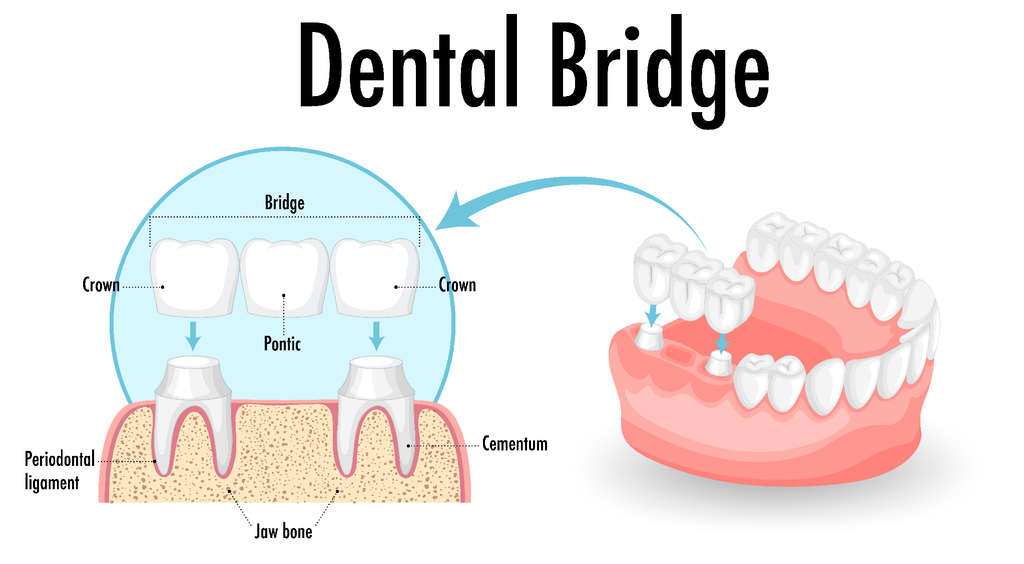
A dental bridge is a fixed restoration that replaces one or more missing teeth by anchoring a false tooth to the natural teeth on either side of the gap. Those neighbouring teeth are shaped down and fitted with crowns, which then support the bridge across the space. Once cemented in place, a bridge functions and looks like a natural row of teeth, and no surgery is involved in fitting one.
What is a dental implant?
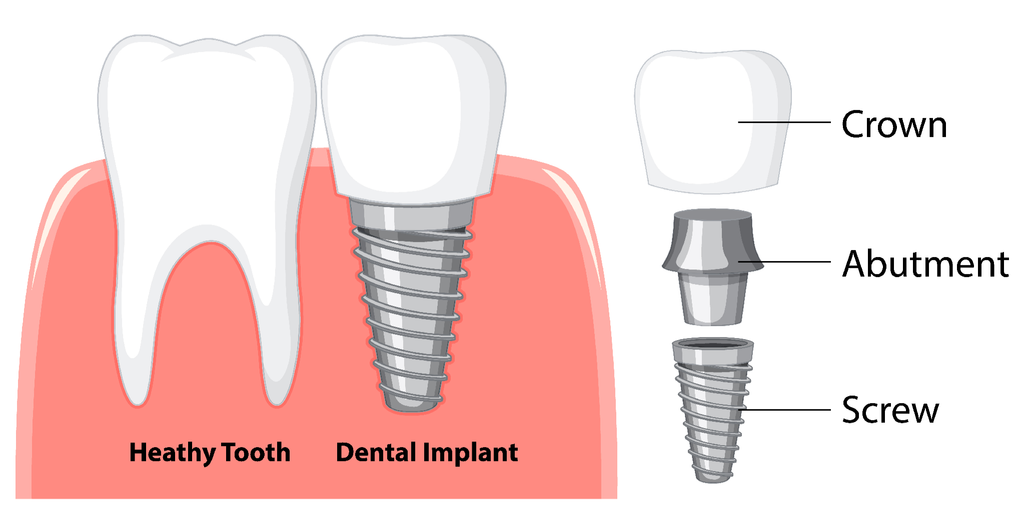
A dental implant replaces the whole tooth, not just the visible crown. A titanium post is placed directly into the jawbone where the tooth is missing, and once it has fused with the bone, usually over several months, a crown is fitted on top. Because the implant post takes over the job the natural tooth root used to do, it doesn’t rely on the neighbouring teeth for support the way a bridge does.
Whichever option is eventually chosen, leaving a missing tooth unreplaced for an extended period tends to cause its own problems. Neighbouring teeth can drift into the empty space, the bite can shift out of alignment, and chewing becomes less even on that side of the mouth. This is part of why most dentists recommend deciding between a bridge and an implant reasonably promptly, rather than leaving the gap as it is.
Dental bridge vs implant, what’s the actual difference?
| Column1 | Dental bridges | Dental implants |
| How it’s supported | Anchored to the teeth either side of the gap | Anchored directly in the jawbone |
| Effect on neighbouring teeth | Those teeth are shaped down for crowns | Neighbouring teeth are left untouched |
| Bone requirements | Not usually a factor | Needs enough healthy bone, grafting may be needed first |
| Typical timeframe | Often completed within a couple of weeks across two visits | Usually several months, implant post first, crown once it has fused |
| Longevity | Commonly 10 to 15 years, sometimes longer with good care | Can last decades, sometimes a lifetime, with good oral hygiene |
| Ongoing care | Cleaning under the bridge with floss threaders or interdental brushes | Cared for much like a natural tooth, alongside regular check-ups |
Individual results vary from patient to patient, and the figures above are general guides rather than guarantees.
What are the pros and cons of each option?
Dental bridge pros and cons
A bridge is usually quicker to complete and doesn’t involve surgery, which makes it a reasonable option for patients who want the gap closed without a lengthy process. It’s also worth considering when the neighbouring teeth already need crowns for other reasons, since the treatment does double duty, and it typically carries a lower upfront cost than an implant, though the actual difference depends on the case. On the downside, healthy tooth structure on either side of the gap has to be shaped down to take the crowns, which can’t be undone once it’s done. A bridge also doesn’t stop the jawbone under the missing tooth from gradually reducing over time, since nothing is replacing the root itself.
Does a bridge stop the bone loss where the tooth is missing? No. Because a bridge sits above the gum rather than replacing the root, the bone underneath can continue to shrink gradually over the years, even once the bridge is fitted and functioning well.
Dental implant pros and cons
An implant leaves the neighbouring teeth untouched, which many patients see as the biggest advantage. It also replaces the root as well as the crown, so it helps maintain the jawbone in that area rather than just filling the visible gap. The trade-off is a longer overall process, a surgical procedure, and a dependence on having enough healthy bone to begin with. Where bone has already been lost, bone grafting is often needed first, which adds time to the process.
Which option is better for replacing a missing tooth?
There isn’t a single answer that suits everyone. The right choice depends on factors that are assessed at a consultation: how much bone is available, the condition of the teeth either side of the gap, how quickly a result is needed, and personal preference around surgery versus a non-surgical option. A patient with strong, healthy teeth next to the gap and a preference for a faster process might lean toward a bridge, while a patient wanting to preserve those neighbouring teeth, and with enough bone to work with, might lean toward an implant.
Can a bridge be converted to an implant later on? In many cases, yes. It’s a common path for patients who choose a bridge first and decide later that an implant suits them better, though this depends on the condition of the teeth and bone at that point and is something to discuss directly with a dentist.
In summary
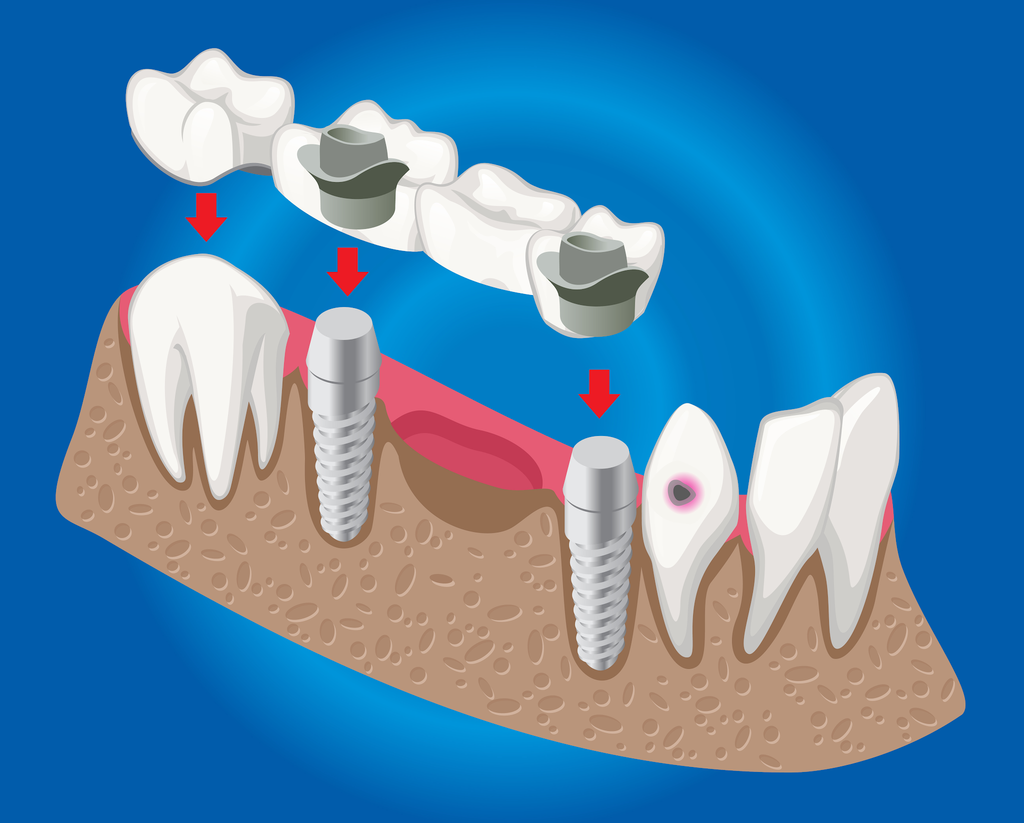
A dental bridge and a dental implant both do the same basic job, closing the gap left by a missing tooth, but they get there in different ways. A bridge relies on the neighbouring teeth and can usually be completed faster, while an implant replaces the tooth root itself and tends to last longer, at the cost of a longer process and a surgical step. Which one fits best comes down to an individual exam rather than a general rule.
Disclaimer: This article is for informational purposes only and does not constitute professional medical or dental advice, diagnosis, or treatment. Every patient’s situation is unique, and treatment recommendations may vary based on individual circumstances. Always consult with a qualified dental professional before making decisions about your oral health care. If you have a dental emergency, contact your dentist or seek immediate medical attention.
FAQs about Dental Implants and Dental Bridges
1. Is a dental implant more expensive than a dental bridge?
Generally, yes, an implant tends to carry a higher upfront cost than a bridge, largely because of the surgical component and the time involved. Exact costs vary by case and are confirmed at a consultation rather than quoted in general terms.
2. How long does a dental bridge last compared to an implant?
A bridge commonly lasts 10 to 15 years, sometimes longer with good care, while an implant can last for decades and sometimes a lifetime with good oral hygiene. Individual results vary depending on the patient and how well the restoration is maintained.
3. Does getting a bridge damage the teeth next to the gap?
Fitting a bridge requires shaping down the neighbouring teeth so they can support crowns, which is irreversible. This is one of the main trade-offs weighed against an implant, which leaves those teeth untouched.
4. Can I get a dental implant if I’ve lost bone in my jaw?
Often, yes, though it may require bone grafting first to build up enough bone to support the implant. Whether grafting is needed is assessed with imaging at the initial consultation.
5. Which option requires less ongoing maintenance?
An implant is generally cared for much like a natural tooth, with regular brushing, flossing and check-ups. A bridge needs a bit more attention underneath the false tooth, usually with floss threaders or interdental brushes, to keep that area clean.
6. Is one option more suitable for older patients?
Not automatically. Suitability depends more on bone health, gum condition and general oral health than age alone, all of which are assessed individually rather than assumed from a patient’s age.
Not sure which option is right for you? Book a consultation and we’ll assess your bone health and neighbouring teeth before recommending anything.
Call (07) 5681 1877 or get in touch through the contact page.