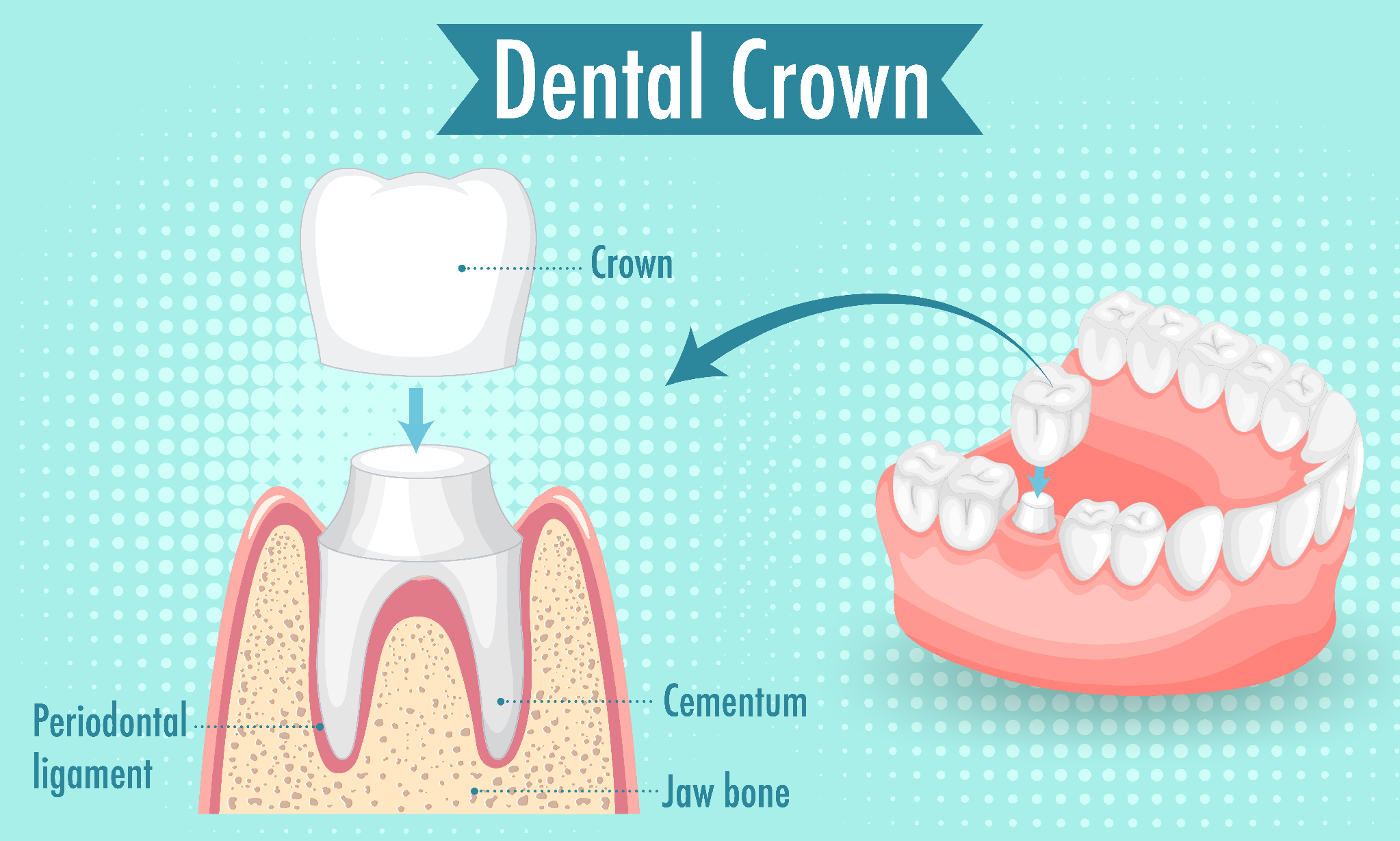
A crown is one of the more established ways to protect a damaged or weakened tooth, and most people want to know roughly how long it will hold up before deciding on one. Cleveland Clinic puts the general range at five to 15 years with proper care, and notes that a well- and notes that a crown can last longer still with good care. The practice’s own dental crowns and bridges page gives a similar typical figure of 10 to 15 years with proper care and regular visits, which sits comfortably within that wider range.
Quick overview
- A crown generally lasts somewhere between five and 15 years, sometimes considerably longer with excellent care
- Material plays a part: all-ceramic crowns, including porcelain and zirconia, offer a natural tooth-coloured look with good strength, while resin is mainly used for short-term temporary crowns.
- Grinding your teeth, especially overnight, is one of the most common reasons a crown fails earlier than expected
- A crown that feels loose, cracked or rough-edged is worth mentioning to your dentist, rather than waiting for it to become painful
Book a check-up with Bundall Dental and Implants if an existing crown feels different, or you are weighing one up and want to know what to expect. Contact us here.
How Long Do Dental Crowns Last on Average?
The five to 15 year range is wide because so much depends on the individual: the material used, how heavily the tooth works when chewing, grinding or clenching habits, and day-to-day care all play a part. With consistently good care and regular check-ups, Cleveland Clinic notes that some crowns last upwards of 30 years. Temporary crowns, usually made of resin or acrylic, are the exception: they are worn for around two to three weeks while the final crown is made, and are not designed for long-term use.
Does the Crown Material Affect How Long It Lasts?
Yes, to some degree, although care, bite forces and the health of the tooth underneath matter just as much as the material itself. Cleveland Clinic describes the main options as follows:
- All-ceramic or porcelain: most closely matches the look of natural enamel, is gentle on the opposing teeth, and suits anyone with a metal allergy
- Zirconia: a strong ceramic option that handles heavier biting forces well, making it a common choice for back teeth
- Porcelain-fused-to-metal (PFM): a metal core with a porcelain surface; durable, though the porcelain layer can chip over time and expose the metal underneath
- Metal (such as gold): rarely chips or breaks and wears well, but its colour means it is usually limited to back teeth that are out of sight
- Resin: the most fragile option, mainly used for temporary crowns that are worn for a few weeks while the final crown is made
At Bundall Dental and Implants, crowns and bridges are made in all-ceramic materials, chosen to suit the tooth and its position and matched to the surrounding teeth. For more on how crowns are planned and fitted, see the dental crowns page.
What Affects How Long a Crown Lasts?
Grinding or clenching (bruxism) is one of the most common reasons a crown wears out or cracks sooner than expected, particularly overnight when it often goes unnoticed. A custom night guard is worth discussing with your dentist if this applies to you.
Oral hygiene matters because the edge where a crown meets the natural tooth is a common spot for plaque to build up. Brushing at least twice daily with fluoride toothpaste, flossing, and keeping up with antibacterial mouthwash where recommended all help protect that margin.
Diet and habits play a part too. Cleveland Clinic advises avoiding extremely hard, crunchy or chewy foods such as ice, hard nuts, popcorn kernels and sticky lollies, all of which put unnecessary stress on a crown.
Regular dental visits are how early wear, a loosening margin, or decay underneath the crown gets picked up before it turns into something bigger. The crown itself cannot decay, but the natural tooth underneath it still can. Crowns are also commonly placed after root canal treatment, where the tooth needs extra protection afterwards.
What are the signs a dental crown needs attention?
A few signs are worth mentioning to your dentist rather than waiting out: the crown feeling loose, a crack or chip you can see or feel, a sharp or rough edge that irritates your tongue or cheek, or a new bad taste or breath that was not there before. None of these automatically mean the crown has failed, but they are the kind of thing that is far easier to deal with early than once it progresses.
How can you help a crown last longer?
Brushing and flossing carefully around the edge of the crown, rather than avoiding the area, helps prevent the decay and gum problems that cut a crown’s life short. Asking about a night guard is worthwhile if you grind or clench, since it takes the pressure off the crown while you sleep. Avoiding very hard or sticky foods and not using your teeth as tools both reduce the risk of a chip or crack. Keeping up with regular check-ups and cleans means any early wear is caught and managed while it is still a simple fix.
If an existing crown feels loose, cracked, or just different lately, or you are considering one and want to know what to expect, book a check-up with Bundall Dental and Implants. We will take a look and let you know what, if anything, needs attention.
Frequently Asked Questions
How long do dental crowns last on average?
Most crowns last somewhere between five and 15 years with proper care, according to Cleveland Clinic, and some last considerably longer when well looked after. How long yours lasts depends on the material, your bite, your oral hygiene and how regularly it is checked.
Does the crown material affect how long it lasts?
Yes, to some degree. All-ceramic crowns, such as porcelain and zirconia, are chosen for their natural, tooth-coloured appearance, with zirconia handling heavier bite forces well. Metal crowns rarely chip but are less natural-looking, and porcelain-fused-to-metal sits between the two. Resin is the most fragile and is mainly used for short-term temporary crowns.
What can make a crown wear out sooner than expected?
Grinding or clenching your teeth, especially overnight, is one of the most common reasons a crown fails earlier than expected. Poor oral hygiene around the edge of the crown, a diet heavy in hard or sticky foods, and skipping regular check-ups can all shorten its working life too.
What are the signs that a crown needs attention?
A crown that feels loose, has a visible crack or chip, has a sharp or rough edge, or is linked to a new bad taste or breath are all worth mentioning to your dentist. None of these necessarily mean the crown has failed completely, but they are worth checking rather than ignoring.
Can a loose or damaged crown be repaired, or does it need replacing?
It depends on the cause. A crown that has come loose because the cement has worn can sometimes simply be re-cemented. Damage to the crown itself, or decay in the tooth underneath, usually means a full replacement is needed. A dental check-up is the only reliable way to tell which applies.
Disclaimer: This article is for informational purposes only and does not constitute professional medical or dental advice, diagnosis, or treatment. Every patient’s situation is unique, and treatment recommendations may vary based on individual circumstances. Always consult with a qualified dental professional before making decisions about your oral health care. If you have a dental emergency, contact your dentist or seek immediate medical attention.