
Root canal treatment (also called Root canal therapy) is one of the most common ways a dentist can save a tooth that would otherwise need to be removed. It treats infection or damage inside the tooth by removing the affected pulp, cleaning the canals and sealing them to help prevent further infection. Understanding why root canal treatment is needed, what the process involves, and what to expect afterwards can make treatment feel far less daunting.
What Is Root Canal Treatment? (Overview)
- Purpose: root canal treatment removes infected or damaged pulp so a natural tooth can often be kept rather than extracted.
- When it’s needed: commonly required for deep decay, a cracked tooth, trauma, or repeated dental work on the same tooth.
- What’s involved: removing the pulp, cleaning and shaping the canals, then filling and sealing the tooth, often followed by a crown.
- Outcome: many teeth can be saved with root canal treatment, though suitability is assessed individually and results vary.
Why Would You Need Root Canal Treatment?
Root canal treatment becomes necessary when the pulp inside a tooth, the soft tissue containing nerves and blood vessels, becomes infected or inflamed. This can happen for several reasons: deep decay that reaches the inner tooth, a crack or fracture that allows bacteria in, repeated dental procedures on the same tooth or trauma such as a knock or impact.
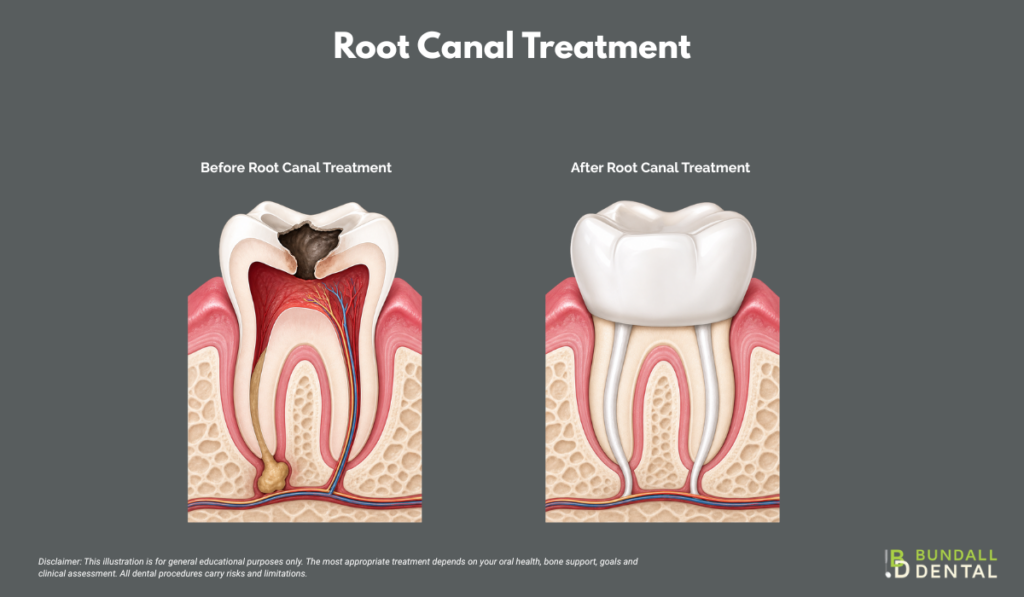
A before-and-after illustration of a tooth that underwent RCT.
Individual steps and visit numbers vary by case.
Does tooth pain always mean you need a root canal? Not necessarily. Tooth pain can have several causes, including sensitivity, gum problems or a cracked filling. A dental examination and X-rays are needed to confirm whether root canal treatment is the appropriate course of action for your particular tooth.
What Happens During Root Canal Treatment?
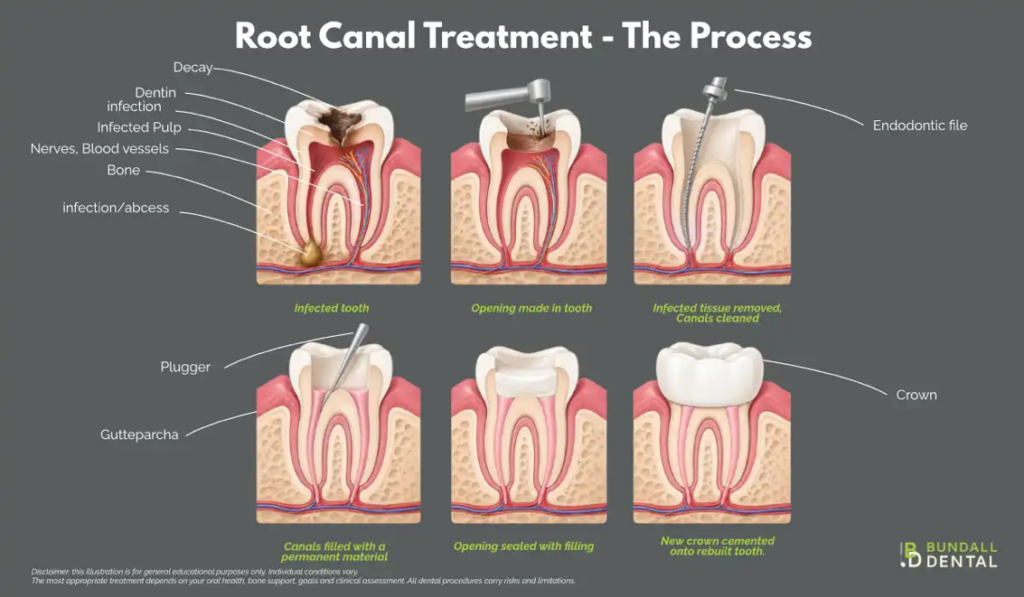
A general overview of the root canal treatment process. Individual steps and visit numbers vary by case.
In broad terms, treatment involves accessing the inside of the tooth, removing the infected or damaged pulp, cleaning and shaping the canals, then filling and sealing them to reduce the risk of reinfection. A crown or other restoration is often recommended afterwards to protect the tooth and restore its strength. For a fuller walkthrough of each stage, see our root canal procedure guide.
What Should You Expect After Treatment?
Some tenderness around the tooth and surrounding gum is common for a few days afterwards and can usually be managed with over-the-counter pain relief. Most people can return to normal activities the same day. Your dentist will confirm any specific aftercare instructions for your tooth.
Will the tooth need a crown afterwards? Often, yes. A root-treated tooth can become more brittle over time, so a crown or other restoration is commonly recommended to protect it, particularly for back teeth that handle more chewing force.
When Should You See a Dentist About Possible Symptoms?
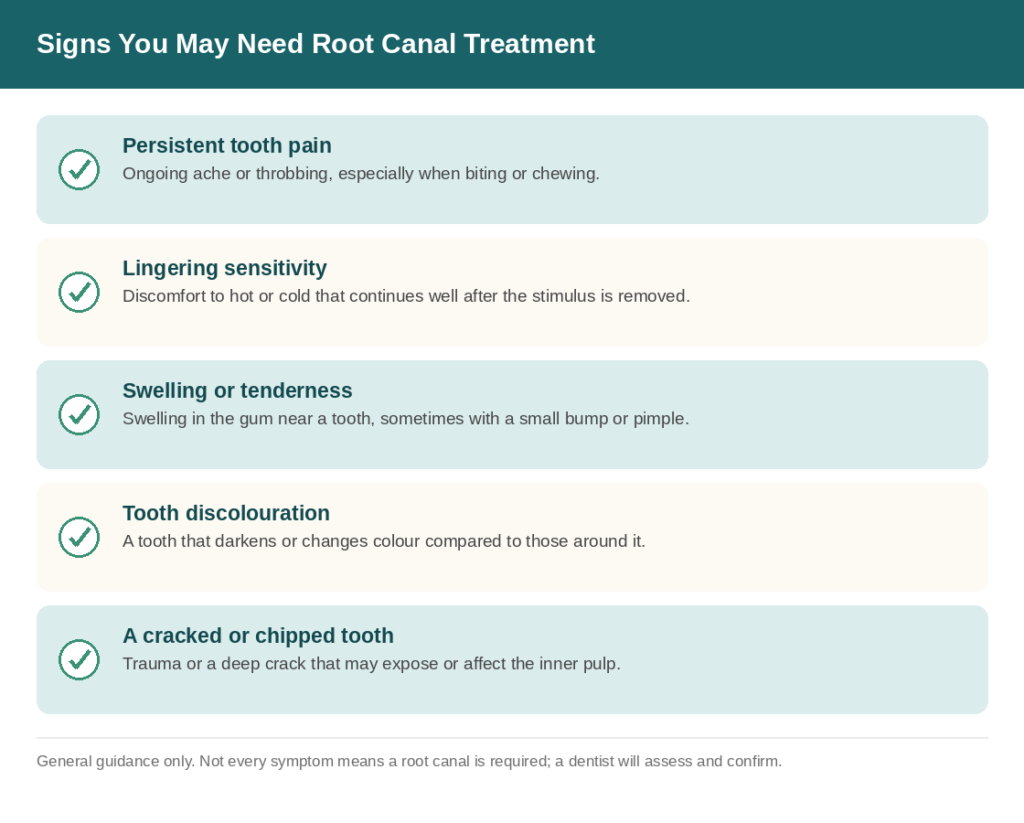
General signs that may indicate the need for a dental assessment. Symptoms vary and should be confirmed by a dentist.
Delaying treatment can allow infection to spread or cause further damage to the tooth. A long-term retrospective study of root canal outcomes reported survival rates of around 97 per cent at 10 years, though outcomes depend on individual factors such as how early treatment is carried out and whether the tooth is later protected with a crown.
How Does Bundall Dental and Implants Approach Root Canal Treatment in Gold Coast?
Every tooth is assessed individually before any treatment is recommended. Our dentists use digital X-rays and a thorough clinical examination to confirm whether root canal treatment is appropriate, explain what is involved, and outline the likely follow-up care, such as a crown. If a tooth is not suitable for root canal treatment, alternative options are discussed openly so you can make an informed decision.
If you are experiencing tooth pain or think you may need root canal treatment, you can find out more on our root canal treatment page or book an assessment with our team.
Summary
Root canal treatment removes infected or damaged pulp to help save a natural tooth that might otherwise need extraction. It is commonly needed because of deep decay, cracks, trauma or repeated dental work and the process involves cleaning, shaping and sealing the tooth, often followed by a crown. Outcomes depend on individual factors, which is why a thorough assessment is the first step.
Frequently Asked Questions
Is root canal treatment painful?
Most patients experience manageable discomfort rather than significant pain, with local anaesthetic used during the procedure itself. Some tenderness afterwards is common and can usually be managed with over-the-counter pain relief.
How long does root canal treatment usually take?
This depends on the tooth and the extent of infection, but treatment is often completed in one to two visits. More complex cases, such as molars with multiple canals, may need additional appointments.
Can every tooth be saved with root canal treatment?
Not always. Factors such as a fracture below the gum line, insufficient remaining tooth structure, or advanced gum disease can affect whether a tooth is suitable, so each case is assessed individually.
What happens if root canal treatment is delayed?
Delaying treatment can allow infection to spread, cause further pain, or reduce the chances of successfully saving the tooth. It is worth having any persistent symptoms checked promptly.
Will I need a crown after root canal treatment?
Often, yes. A crown or other restoration is commonly recommended to protect a root-treated tooth and restore its strength, particularly for back teeth.
Disclaimer: This article is for informational purposes only and does not constitute professional dental advice. Every patient’s situation is unique. Always consult a qualified dental professional before making decisions about your oral health.