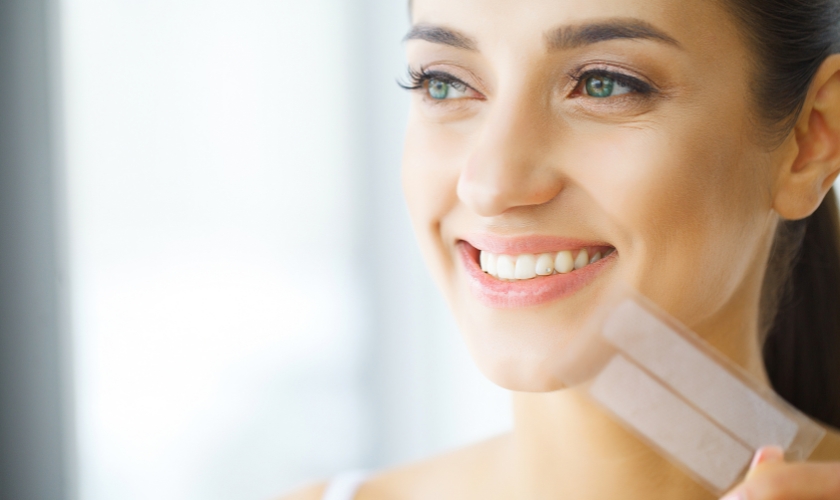
Most teeth whitening strips use a peroxide-based gel (often hydrogen peroxide or carbamide peroxide). Peroxide works by moving through tiny pathways in enamel and breaking down stain molecules. That is why many people notice improvement in yellow or brown surface staining from coffee, tea, red wine, and smoking.
It also explains why some people feel short, sharp sensitivity during teeth whitening. Peroxide can temporarily irritate the tooth nerve, especially if the enamel is worn, if there are exposed roots, or if the gel sits against the gums.
Whitening strips are designed to stick to the tooth surface. Anything that blocks contact, such as plaque, a sticky film from food, or heavy tartar, can reduce how evenly the strip gel sits on enamel. If you are based on the Gold Coast, whether in Bundall, Surfers Paradise, Broadbeach, or Southport, and you are considering teeth whitening, understanding how strips work can help you get better results and manage sensitivity more effectively. You can also explore professional teeth whitening options at Bundall Dental and Implants.
Brushing before strips: when it helps and why
Brushing before you apply strips usually helps for one main reason: it removes plaque and food residue so the strip can sit flush against the enamel. That can support more consistent contact, which is useful for even colour change.
Brushing can also reduce the chance that the strip traps debris against the tooth, which can feel unpleasant and may irritate the gums.
That said, brushing is not about “scrubbing stains off” right before teeth whitening. The peroxide does the whitening work. Your goal with brushing is simply a clean surface.
Brushing right before strips can make sensitivity worse
Brushing can be a problem if you are aggressive or if you brush at the wrong time. Whitening gel can irritate tissues more easily if:
- Your gums are already inflamed or bleeding.
- You brush too hard and create small abrasions at the gumline.
- You use a gritty whitening toothpaste right before strips.
- You brush soon after acidic foods or drinks, when enamel is temporarily softer.
Acid exposure can come from citrus, soft drinks, sports drinks, kombucha, vinegar-based foods, and even some vitamin C supplements. If you brush immediately after acid, you may wear enamel more easily. The Australian Dental Association (ADA) gives general advice to wait after acidic foods or drinks before brushing. You can read more in the ADA’s consumer guidance on oral health habits at ada.org.au. You can also read our dental health habits guide for practical tips for Gold Coast patients.
The practical answer: brush gently, then wait
For many people, a balanced approach works well:
- Brush gently first (soft toothbrush, light pressure).
- Floss if you have food stuck between teeth.
- Wait 15 to 30 minutes before applying strips.
This short wait gives saliva time to rebalance the mouth environment and can reduce irritation, especially if you are prone to sensitivity.
If you are not sensitive and you have not had acidic foods, you may not need the full wait. But if you have ever had zingers during teeth whitening, waiting is a simple adjustment that can make the routine more comfortable.
Brush before or after whitening strips: a quick comparison
.green-table { width: 100%; border-collapse: collapse; font-family: Arial, sans-serif; } .green-table th { background-color: #2e7d32; color: white; padding: 12px; text-align: left; } .green-table td { border: 1px solid #c8e6c9; padding: 10px; } .green-table tr:nth-child(even) { background-color: #f1f8f4; } .green-table tr:hover { background-color: #e8f5e9; }| Routine option | When it can make sense | Potential downside | Who it suits |
|---|---|---|---|
| Brush before strips | Helps strips adhere evenly on clean teeth | If you brush hard, gums may sting with peroxide | Most people using strips |
| Brush immediately after strips | Removes leftover gel taste and residue | Brushing straight after peroxide may increase sensitivity for some | People with low sensitivity |
| Rinse after strips, brush later | Gentle way to clear gel without friction | You may keep a mild peroxide taste for longer | People prone to sensitivity |
| Brush and floss, wait 15 to 30 minutes, then strips | Balances cleanliness and comfort | Requires planning and a timer | People who want a cautious routine |
A step-by-step at-home routine for teeth whitening strips
This routine is designed for readability and practicality, not perfection. Always follow the instructions on your specific product.
1) Check if whitening strips are a fit for you
Whitening strips can be reasonable for mild to moderate surface stains. They may not deliver the result you want if you have:
- Crowns, veneers, or tooth-coloured fillings on front teeth (they do not whiten like enamel)
- Internal discolouration (for example, after trauma or root canal)
- Banding or patchy colour from enamel defects
If your colour difference is uneven, a teeth whitening dentist can help you understand what can realistically change and what needs a different approach. If you are unsure whether whitening strips are right for you, our cosmetic dentistry team at Bundall Dental and Implants can assess your teeth and recommend the most suitable option.
2) Brush gently (avoid abrasive products)
Use a standard fluoride toothpaste and a soft brush. Skip charcoal powders or highly abrasive “whitening” pastes right before strips. Abrasive products can increase irritation and may worsen sensitivity.
Aim for a light, thorough brush rather than a long scrub.
3) Floss once, if needed
Flossing is useful if you have food between teeth. If flossing makes your gums bleed, do not push through aggressively right before whitening. Bleeding gums can sting when peroxide contacts them.
If bleeding is frequent, it is worth booking a check-up and clean.
4) Wait 15 to 30 minutes
This is optional, but helpful if you have sensitive teeth. Use the time to dry your teeth slightly with a tissue (if your strip instructions suggest a drier surface) and set a timer.
5) Apply strips carefully (keep gel off gums)
Try to place the strip on the tooth surfaces rather than over the gumline. Many people get gum irritation simply because the strip overlaps onto gum tissue.
If gel squishes out, wipe it gently with a cotton tip or tissue.
6) Remove strips, then rinse
Once you remove the strips, rinse with water. If your teeth feel sensitive, consider postponing brushing for a bit and simply rinsing first.
If you prefer brushing after, use a soft brush and go lightly.
7) Avoid stain foods for a short window
After teeth whitening, enamel can be more prone to picking up stains for a period of time. If you want to protect your effort, consider limiting coffee, red wine, cola, curry, and soy sauce soon after each session.
You do not need an extreme “white diet” for days, but a little awareness of timing can help.
Common mistakes that cause patchy whitening with strips
Patchiness is one of the most frustrating parts of DIY whitening. It usually comes down to contact, tooth anatomy, or existing dental work.
Plaque or tartar causing uneven contact
If you have tartar buildup, strips cannot sit smoothly against the enamel. Whitening may look uneven because some areas are shielded.
A professional clean can make a noticeable difference before teeth whitening, because it removes hardened deposits that brushing cannot.
Overlapping strips onto gums
Gum irritation can make it hard to finish a full course of strips. If you stop early, whitening can look uneven.
Whitening when you already have sensitivity
If you begin whitening while your teeth are already sensitive, you may struggle to keep going. Many people interpret this as “strips do not work,” when the real issue is that the teeth need an assessment first.
Expecting crowns or fillings to match
Whitening changes natural tooth structure. Restorations are different materials. If you whiten and your crown stays the same shade, you may notice a mismatch.
This is one reason a Dentist in Gold Coast can be helpful before you whiten, especially if you have visible dental work such as crowns or tooth-coloured fillings.
Teeth whitening and sensitivity: what helps (and what to avoid)
Sensitivity is common and often temporary. It does not always mean damage, but it is a signal to adjust.
Strategies that may help include:
- Use a sensitive toothpaste (with potassium nitrate) for 1 to 2 weeks before whitening.
- Reduce frequency (every second day instead of daily) if product instructions allow.
- Shorten wear time if the brand permits it.
- Avoid very cold drinks during your whitening course.
Avoid doubling up methods. For example, using strips plus strong whitening trays or harsh whitening toothpastes at the same time can be too much for many people.
If sensitivity is strong, persistent, or one tooth hurts more than others, stop and book an exam. A cracked tooth, decay, or gum recession may be the real issue. You can read more about tooth sensitivity causes and treatment, and gum recession on our website.
When it is time to see a tooth whitening dentist
At-home products can be convenient, but they do not screen for dental problems first. It is worth seeing a clinician before whitening if:
- You have cavities, broken fillings, or gum disease symptoms.
- You have significant gum recession or exposed roots.
- You are pregnant or breastfeeding and want individual advice.
- You have braces, retainers, or other appliances.
- You have a history of strong sensitivity.
A dentist can also confirm what type of staining you have and whether in-chair whitening or custom trays would be more suitable for your goals.
If you are looking for teeth whitening on the Gold Coast look for a clinic that explains risks, checks existing restorations, and discusses realistic shade change. At Bundall Dental and Implants, Dr Mehran Shaibani takes a thorough, patient-centred approach to all cosmetic treatments, including whitening.
Teeth whitening Gold Coast: at-home strips vs professional whitening
Many people start with strips and later decide they want a more controlled approach. The main differences are concentration, fit, and supervision.
At-home strips are one-size and can slip. Professional options can be tailored to your mouth, and your dentist can manage sensitivity, gum protection, and expectations.
If you are unsure what path makes sense, you can start with a check-up and clean and ask what would be appropriate for your enamel, gums, and existing dental work. You can also compare porcelain veneers and composite bonding as cosmetic alternatives if whitening alone will not achieve your goals. For local support across Bundall, Surfers Paradise, Broadbeach, and Southport, explore our full range of cosmetic dentistry services at Bundall Dental and Implants.
Frequently Asked Questions
Should I brush my teeth right before whitening strips?
Brushing gently before whitening strips can help them sit evenly on clean teeth. If you are prone to sensitivity, wait 15 to 30 minutes after brushing before applying the strips.
Should I floss before using teeth whitening strips?
Flossing can help if you have food stuck between teeth. If flossing causes bleeding, avoid aggressive flossing right before whitening because peroxide may sting on irritated gums.
Can I use whitening strips after mouthwash?
You can, but avoid strong alcohol-based mouthwashes right before whitening if they dry or irritate your gums. If you use mouthwash, consider using a mild formula and waiting a short time.
Should I brush my teeth after whitening strips?
Many people rinse after removing strips and brush later. If you brush immediately after and notice sensitivity, switch to rinsing first and brushing gently after a short wait.
Why are my results uneven with teeth whitening strips?
Uneven results can happen if strips do not contact the tooth evenly, if there is tartar buildup, or if you have crowns or fillings that do not whiten. A dental clean and assessment can help.
Is professional teeth whitening safer than strips?
Professional whitening is supervised and can be customised, which can reduce gum irritation and help manage sensitivity. The right option depends on your teeth, your goals, and your history of sensitivity.
Book a teeth whitening assessment on the Gold Coast
If you are considering teeth whitening and you want to avoid avoidable sensitivity or patchy results, a pre-whitening check can help identify issues like decay, gum recession, or old restorations that may affect the outcome. If you are looking for a Dentist in Gold Coast, Bundall Dental & Implants can talk you through your options, including whether whitening strips are suitable for you and how to use them with less irritation.
Visit Bundall Dental & Implants to book an appointment or explore more oral health resources.