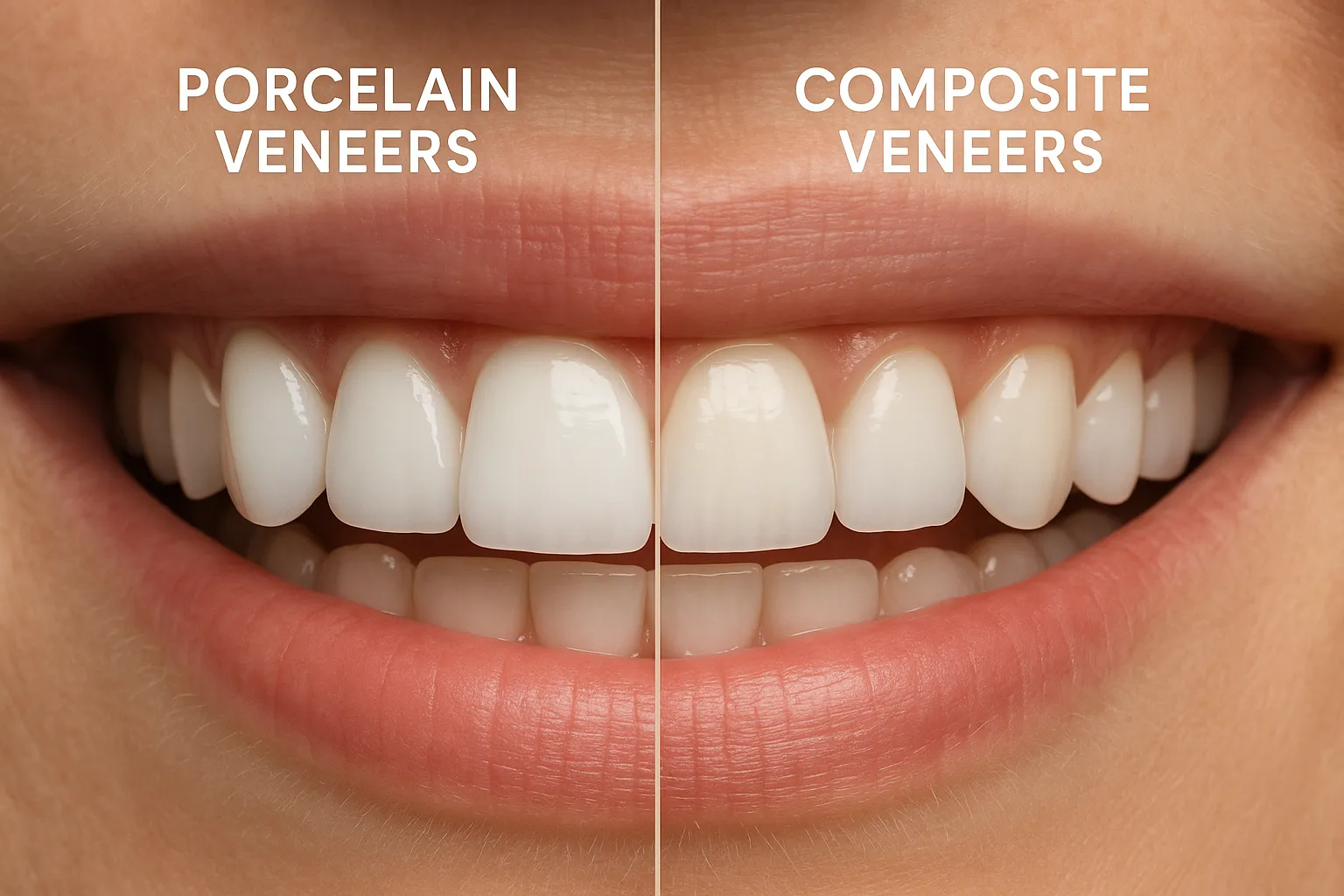
If you have been considering dental veneers on the Gold Coast, one of the first decisions you will face is choosing between porcelain and composite. Both options can improve the appearance of chipped, stained, uneven, or gapped teeth, but they differ in how they are made, how they are applied, and how long they may last.
This guide explains the key differences between porcelain veneers and composite veneers so you can have a more informed conversation with your dentist about which approach may be appropriate for your situation.
What Are Dental Veneers?
Dental veneers are thin shells designed to cover the front surface of teeth. They are used to address a range of cosmetic concerns, including discolouration that does not respond to teeth whitening, minor chips or cracks, small gaps between teeth, and uneven or worn edges. Veneers are custom-designed to match the natural shape, size, and shade of your surrounding teeth.
Porcelain Veneers
Porcelain veneers are custom-fabricated in a dental laboratory from ceramic material. The process typically requires two or more appointments. During the first visit, a thin layer of enamel is removed from the front of the teeth to create space for the veneer. Impressions or digital scans are then taken and sent to the laboratory, where each veneer is individually crafted. At the second appointment, the veneers are bonded to the teeth.
Porcelain has a translucency that closely resembles natural tooth enamel, which can result in a lifelike appearance. The material is also highly resistant to staining from food and drinks. With good oral hygiene and regular dental visits, porcelain veneers may last ten years or longer; however, the lifespan of any restoration depends on individual factors and ongoing maintenance. It is worth noting that enamel removal is irreversible; once teeth are prepared for porcelain veneers, they will always require a restoration of some kind.
Composite Veneers (Dental Bonding)
Composite veneers, sometimes referred to as composite bonding, involve applying a tooth-coloured resin material directly to the tooth surface. The material is shaped by the dentist during the appointment, built up in layers, and hardened with a curing light. In many cases, composite veneers can be completed in a single visit, and little to no enamel removal may be required.
Composite is a versatile option for addressing minor chips, small gaps, or isolated staining. However, the material is more susceptible to staining over time and may require polishing or touch-ups to maintain its appearance. With proper care, composite bonding may last between five and seven years, though longevity depends on factors such as the location of the bonding, dietary habits, and whether you grind your teeth. You can read more about composite bonding and how it compares to other options on our website here.
How Do They Compare?
Understanding the practical differences between porcelain and composite veneers can help you weigh up which option may align with your needs:
- Number of appointments – porcelain typically requires two or more visits; composite can often be completed in one
- Tooth preparation – porcelain usually requires enamel removal, which is irreversible; composite may require minimal to no preparation
- Appearance – porcelain closely mimics natural enamel translucency; composite can achieve a natural result but may not match porcelain’s depth of colour
- Stain resistance – porcelain is highly stain-resistant; composite may pick up stains over time, particularly at the edges
- Repairability – if a composite veneer chips, it can often be repaired chairside; a chipped porcelain veneer may need to be replaced entirely
- Longevity – porcelain may last a decade or more; composite typically lasts five to seven years. Individual results vary based on oral hygiene, habits, and the extent of the restoration
What Influences the Cost for Veneers on the Gold Coast
The cost for veneers depends on several clinical and individual factors rather than a fixed figure. These include:
- Type of veneer selected – porcelain veneers involve laboratory fabrication, which adds to the overall fee compared to composite
- Number of teeth being treated – a single tooth restoration differs from a full smile makeover involving six or more veneers
- Preparatory treatment – if whitening, gum reshaping, or other dental work is needed before veneers, this adds to the overall plan
- Complexity of the case – significant bite issues, tooth wear, or existing restorations may require additional planning
- Private health insurance – some policies provide partial rebates for dental veneers, depending on your level of cover and policy terms. Always confirm details with your insurer before treatment
During your initial consultation, the team at Bundall Dental and Implants will provide a clear treatment plan and outline of associated fees so there are no surprises.
Which Option May Be Right for You?
The best choice depends on your individual circumstances, including the condition of your teeth, your aesthetic goals, how much tooth preparation you are comfortable with, and the level of maintenance you are willing to commit to. Some patients choose composite bonding for a single tooth and porcelain for a broader smile makeover. Others may start with composite as a more conservative first step.
Your dentist can assess factors such as enamel thickness, bite alignment, existing restorations, and gum health to recommend the approach that may be most suitable. A clinical assessment is the most reliable way to determine which type of veneer is appropriate for your teeth.
Frequently Asked Questions
How long does composite bonding last?
With proper care, composite bonding may last between three and ten years. Longevity depends on the location of the bonding, the extent of the restoration, your oral hygiene habits, and whether you have habits such as teeth grinding. Your dentist can advise on what to expect based on your specific situation.
Can I get veneers if my teeth are crooked?
Veneers can address minor alignment irregularities and may create the appearance of straighter teeth. However, for more significant misalignment, your dentist may suggest orthodontic treatment first. In some cases, a combination approach alignment followed by veneers may achieve a more stable and natural-looking result.
Should I whiten my teeth before getting veneers?
Porcelain and composite materials cannot be whitened once placed. If you are considering whitening alongside veneers, it is usually recommended to whiten your natural teeth first and then match the veneer shade to the lighter colour. This ensures a consistent appearance. You can learn more about your teeth whitening options.
Are Australian-made veneers available on the Gold Coast?
Yes. At Bundall Dental and Implants, we use dental laboratories that produce veneers in Australia using high-quality ceramic materials. Australian-made veneers are subject to the Therapeutic Goods Administration (TGA) regulations, which govern the safety and quality of medical devices used in the country.
Considering Veneers on the Gold Coast?
At Bundall Dental and Implants, Dr Mehran Shaibani has over 25 years of clinical experience in cosmetic and restorative dentistry, including porcelain veneers, composite bonding and comprehensive smile makeovers. Every treatment plan is tailored to the individual, with a focus on clinical assessment, transparent communication, and patient-centred care.
We welcome patients from across the Gold Coast, including Bundall, Surfers Paradise, Broadbeach, Southport, Mermaid Beach, Mermaid Waters, Benowa, Carrara, Nerang, and surrounding suburbs.
To discuss your options or book a consultation, contact Bundall Dental and Implants:
Phone: (07) 5681 1877
Location: 30 Ashmore Rd, Bundall QLD 4217
Website: www.bundalldentalandimplants.com.au
Meet the Dentist: Dr Mehran Shaibani
Disclaimer
This article is for informational purposes only and does not constitute professional medical or dental advice, diagnosis, or treatment. Every patient’s situation is unique, and treatment recommendations may vary based on individual circumstances. Always consult with a qualified dental professional before making decisions about your oral health care. If you have a dental emergency, contact your dentist or seek immediate medical attention.
{ “@context”: “https://schema.org”, “@type”: “FAQPage”, “mainEntity”: [{ “@type”: “Question”, “name”: “How long does composite bonding last?”, “acceptedAnswer”: { “@type”: “Answer”, “text”: “With proper care, composite bonding may last between three and ten years. Longevity depends on the location of the bonding, the extent of the restoration, your oral hygiene habits, and whether you have habits such as teeth grinding. Your dentist can advise on what to expect based on your specific situation.” } },{ “@type”: “Question”, “name”: “Can I get veneers if my teeth are crooked?”, “acceptedAnswer”: { “@type”: “Answer”, “text”: “Veneers can address minor alignment irregularities and may create the appearance of straighter teeth. However, for more significant misalignment, your dentist may suggest orthodontic treatment first. In some cases, a combination approach alignment followed by veneers may achieve a more stable and natural-looking result.” } },{ “@type”: “Question”, “name”: “Should I whiten my teeth before getting veneers?”, “acceptedAnswer”: { “@type”: “Answer”, “text”: “Porcelain and composite materials cannot be whitened once placed. If you are considering whitening alongside veneers, it is usually recommended to whiten your natural teeth first and then match the veneer shade to the lighter colour. This ensures a consistent appearance. You can learn more about your teeth whitening options.” } },{ “@type”: “Question”, “name”: “Are Australian-made veneers available on the Gold Coast?”, “acceptedAnswer”: { “@type”: “Answer”, “text”: “Yes. At Bundall Dental and Implants, we use dental laboratories that produce veneers in Australia using high-quality ceramic materials. Australian-made veneers are subject to the Therapeutic Goods Administration (TGA) regulations, which govern the safety and quality of medical devices used in the country.” } }] }